

Let’s be honest — nobody trusts online reviews anymore. Between fake ratings, paid testimonials, and customers venting after a single bad experience, “stars” have lost their sparkle.
Platforms like Trustpilot were built to restore transparency — a place where genuine customer voices shape brand credibility. Yet, in 2026, even the most honest review systems are struggling with the same challenge: engagement. People rarely feel motivated to leave feedback unless they’re unhappy.
That’s where gamification — the science of making everyday interactions more engaging through game-like design — steps in. When combined with review systems, it can turn a boring feedback process into something meaningful, even enjoyable.
In this article, we’ll explore how gamification can transform the way Trustpilot — and platforms like it — build trust, authenticity, and community.
The Rise of the Trust Economy
Trust has become the most valuable digital currency. Every buying decision, from a $10 gadget to enterprise software, now starts with one question: Can I trust this brand?
A 2025 BrightLocal survey revealed that 91% of online consumers read reviews before making a purchase. On average, a business with a rating above 4.5 stars converts 32% more customers than competitors with lower ratings.
But this trust economy is fragile. The same systems that built credibility are now being undermined by review fatigue, fake feedback, and algorithmic manipulation. Many platforms — even Trustpilot, the industry’s benchmark for transparency — face the challenge of keeping users genuinely motivated to share real experiences.
What Is Trustpilot and Why It Matters
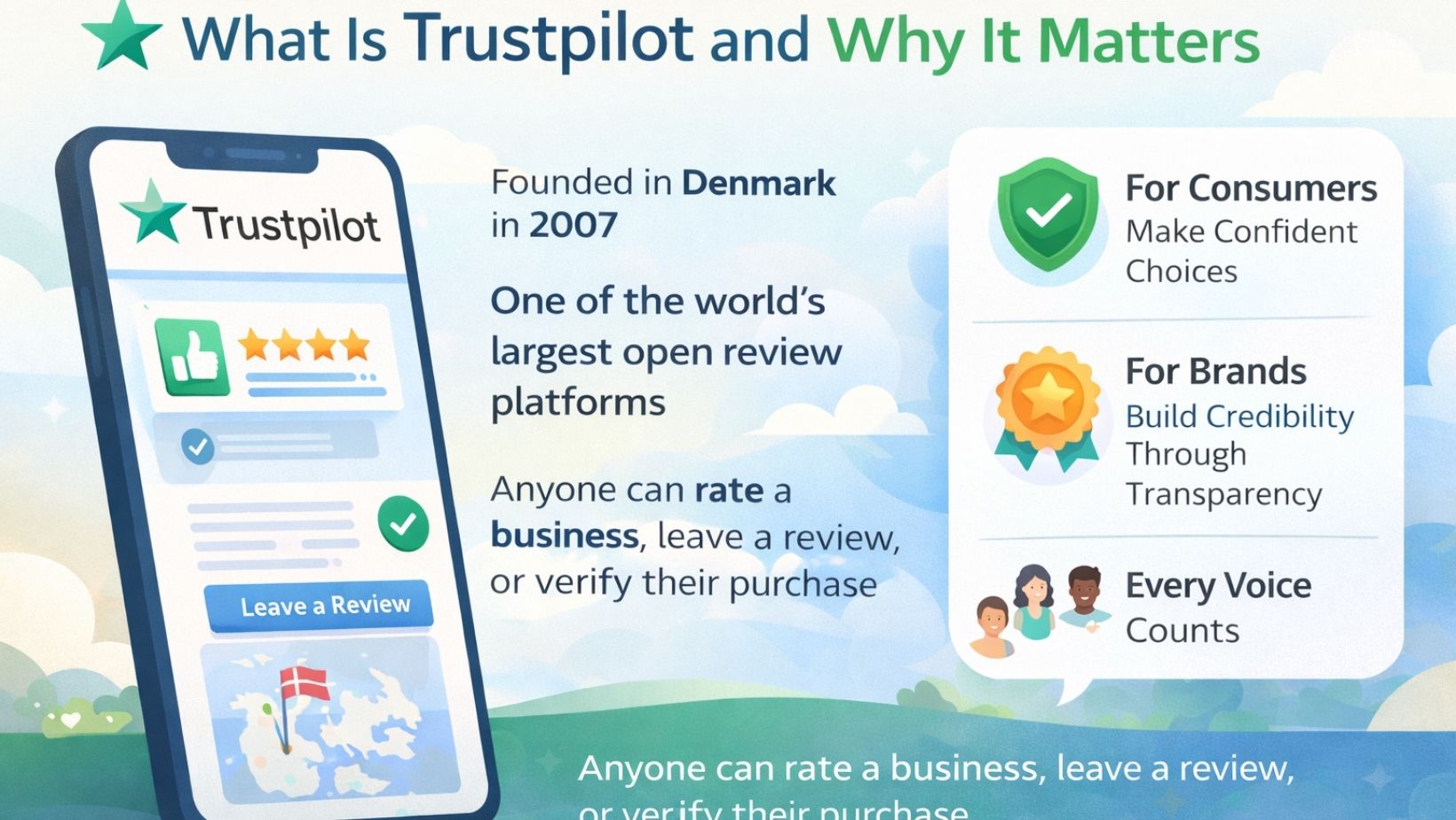
Founded in Denmark in 2007, Trustpilot is now one of the world’s largest open review platforms. Its purpose is simple: to make sure every voice counts. Anyone can rate a business, leave a review, or verify their purchase.
For consumers, it’s a way to make confident choices. For brands, it’s an opportunity to build credibility through transparency.
Yet, while its mission remains noble, the experience itself hasn’t evolved much. Clicking “Leave a Review” still feels transactional, not emotional. It’s not rewarding, it’s not engaging, and for most users, it’s not fun.
That’s where gamification becomes relevant — because trust is built on consistent, voluntary participation, and gamification is an engine that fuels precisely that.
The Problem: Review Fatigue and Authenticity Crisis
We live in a time where online feedback is both essential and exhausting. Consumers have learned to distrust inflated scores, and many suspect companies of filtering or incentivizing reviews selectively.
From the brand’s perspective, getting reviews feels like pulling teeth. Customers rarely take the time unless they’re angry or disappointed. Positive experiences often go unspoken, creating an imbalanced reputation.
There’s also a motivational gap. Traditional review forms lack personality. They feel like chores. Users don’t get any real satisfaction or acknowledgment from sharing feedback.
That’s where gamification offers a breakthrough. It can revive user motivation, reward authenticity, and create emotional satisfaction where none existed before.
Gamification as the Solution for Review Platforms
Gamification isn’t about turning everything into a game. It’s about borrowing the mechanics that make games addictive — progress, achievement, recognition, and community — and applying them to non-game contexts like reviews.
Think of it as creating micro-moments of satisfaction. You leave a review, and instead of a simple “Thanks for your feedback,” you unlock a “Trusted Contributor” badge. You reach five verified reviews and hit Level 2. You receive a notification: “You’ve helped 50 people make smarter choices this month!”
Suddenly, you’re not just leaving feedback — you’re building reputation capital.
Psychologically, this works because gamification taps into intrinsic motivation — our natural drive to achieve, improve, and be recognized. Unlike extrinsic rewards (discounts or cashbacks), intrinsic ones create lasting engagement.
In a Trustpilot-like system, that could mean transforming the platform from a feedback archive into a living reputation ecosystem.
How Gamification Can Enhance Trustpilot’s Model
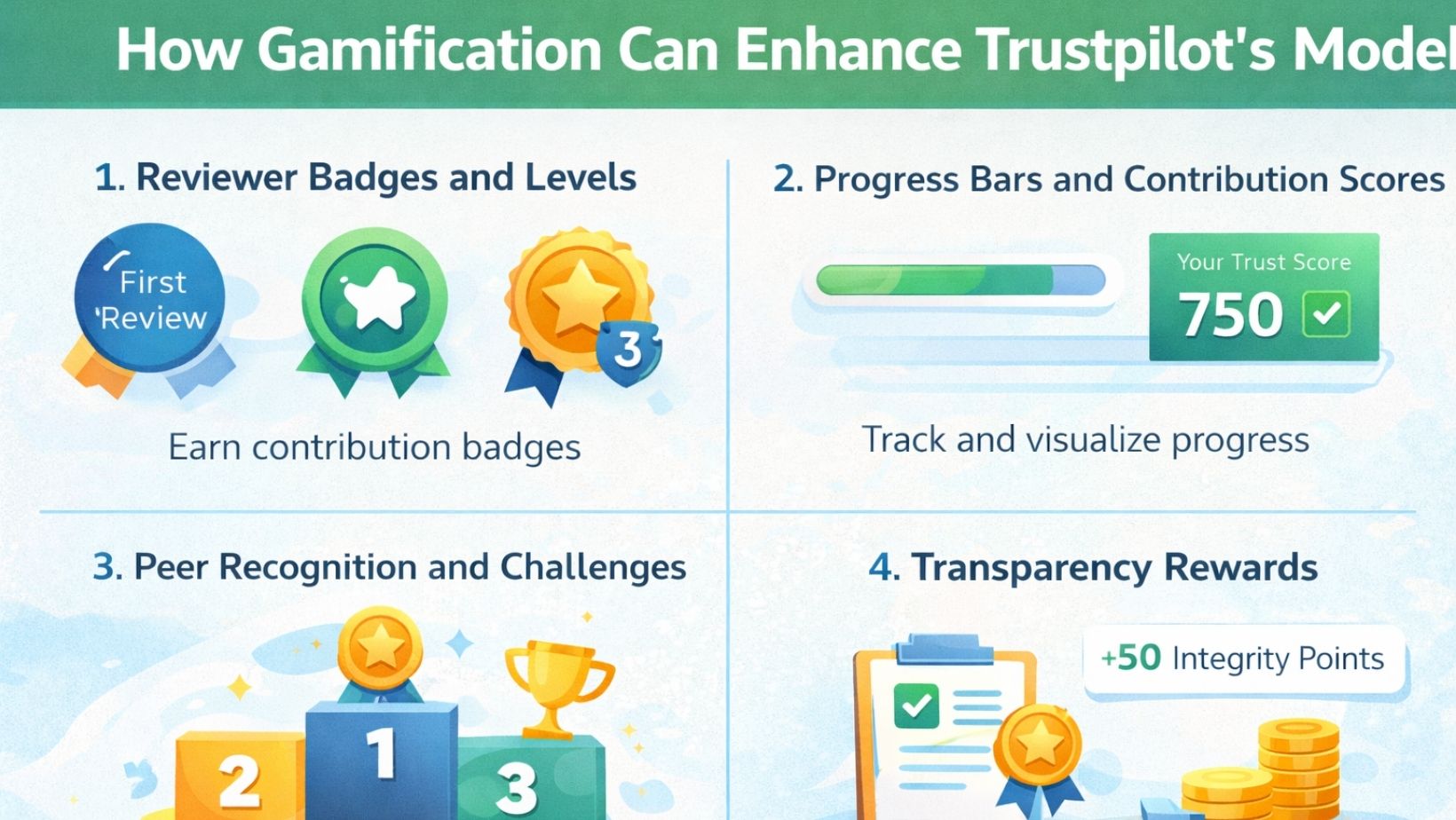
So, how exactly could this look in action? Let’s explore a few design concepts that could bring gamification to life on platforms like Trustpilot.
1. Reviewer Badges and Levels
Each verified reviewer could earn badges based on contribution milestones — for example, First Review, Verified Buyer, Insightful Critic, or Community Helper. These aren’t gimmicks; they signal authenticity and build trust among other users.
When readers see that a review comes from a Level 3 “Top Reviewer,” it instantly carries more weight.
2. Progress Bars and Contribution Scores
Trustpilot could visualize a user’s contribution history through a progress bar or “trust score.” As reviewers engage more, they see tangible progress — similar to what drives engagement in fitness apps or language-learning platforms like Duolingo.
3. Peer Recognition and Community Challenges
Imagine a monthly “Community Challenge” — users who leave thoughtful, detailed reviews could appear on a leaderboard or earn digital medals. It’s playful, but it’s also powerful. Recognition creates emotional attachment and belonging — essential elements of authentic trust.
4. Transparency Rewards
Gamification can also reinforce honesty. Verified reviews, for instance, could earn “Integrity Points” that elevate a user’s credibility score. Over time, the system would naturally highlight trustworthy voices, minimizing fake or spammy reviews.
These mechanics may sound simple, but collectively, they can transform a passive review platform into an active engagement ecosystem — one where users feel recognized, brands feel supported, and trust becomes a shared outcome.
Case Studies and Global Examples
Several global platforms have already proven how effective gamification can be in similar contexts.
TripAdvisor rewards frequent contributors with badges like “Top Reviewer” or “Destination Expert.” These simple signals create identity — users feel proud to contribute because their efforts are visible.
Google’s Local Guides Program takes it further. Reviewers earn points for every review, photo, or edit they add to Google Maps. They unlock new levels and perks, like early access to features. The result? Over 120 million active contributors worldwide.
Trustpilot can adopt a similar framework but tailor it for authenticity rather than volume. A model where quality reviews — verified, detailed, and helpful — are rewarded more than quantity. That’s the key difference between gamification done right and shallow point-chasing.
Business Applications: Building a Gamified Trust Strategy
For businesses using Trustpilot, gamification isn’t just about adding fun — it’s a measurable growth strategy.
Encouraging customers to leave reviews can become part of the post-purchase journey. A brand could introduce micro-rewards: points, badges, or status levels that recognize verified reviewers. These rewards don’t need to be monetary. Recognition itself is powerful.
For example, after a customer leaves three honest reviews, they might earn a “Verified Voice” badge that appears publicly. Not only does it make them feel valued, but it also builds social proof for the brand.
In B2B contexts, gamified Trustpilot integrations could track metrics like reviewer consistency, helpfulness, or responsiveness — turning customer feedback into an ongoing engagement funnel rather than a one-time task.
The business wins trust. The user wins recognition. The platform wins retention. Everyone benefits.
Challenges and Ethical Considerations
Of course, gamification isn’t a silver bullet. It can be misused if designed carelessly.
The biggest risk? Over-incentivizing reviews. When users chase points rather than authenticity, the feedback loses meaning. Gamified systems must balance fun with fairness, ensuring that trust — not vanity — remains the core motivation.
Transparency is also critical. Users should know exactly how badges or levels are earned, and algorithms should remain auditable. Data privacy and honest representation should never be gamified.
When designed responsibly, gamification amplifies honesty. When misused, it erodes it. Trustpilot and similar platforms must therefore focus on rewarding truth, not quantity.
The Psychology Behind Gamified Trust
At its core, gamification leverages three psychological pillars: autonomy, mastery, and purpose.
Autonomy — users feel in control of their contributions.
Mastery — they see their impact grow over time.
Purpose — they believe their reviews genuinely help others.
When these needs are met, engagement skyrockets. And in the context of Trustpilot, it can mean the difference between a silent community and an active ecosystem of trusted reviewers.
This shift from transactional to experiential interaction is what will define the next decade of online trust systems.
The Future: Trust as a Shared Game
Imagine opening Trustpilot in 2028 and seeing a vibrant dashboard: live reviewer rankings, progress trackers, authentic badges — all built around contribution, not competition. You’d see communities forming around niche interests, experts recognized for deep insights, and verified transparency integrated into every interaction.
That’s not just a dream; it’s the natural evolution of user engagement. Trust becomes dynamic.
For readers interested in how digital transparency and document authenticity are being secured through next-generation verification tools, you can explore SafePaper’s homepage — a practical example of how technology is shaping trust in online ecosystems.
The companies that adopt this model early will redefine what digital trust means. They won’t just collect reviews — they’ll cultivate relationships.