Gamification has become one of the most powerful tools in modern digital design. From fitness apps to productivity platforms, companies use game mechanics – points, rewards, and progression systems – to keep users engaged. But long before gamification became a buzzword, one industry had already mastered it: slot gaming.
Today, slot games represent one of the most advanced and refined forms of gamification, combining psychology, technology, and user experience design into highly engaging digital systems.
Table of Contents
ToggleThe Core of Gamification: Reward and Engagement
At its foundation, gamification is about motivation. Systems are designed to encourage repeated behavior through rewards, feedback, and a sense of progress. Common elements include:
- Points and rewards
- Progress tracking
- Challenges and achievements
- Immediate feedback loops
Research shows that these elements significantly increase engagement by triggering psychological responses tied to motivation and satisfaction. Gamified systems are particularly effective when rewards are unpredictable – a concept known as variable reinforcement, which plays a central role in slot design.
Why Slot Games Excel at Gamification
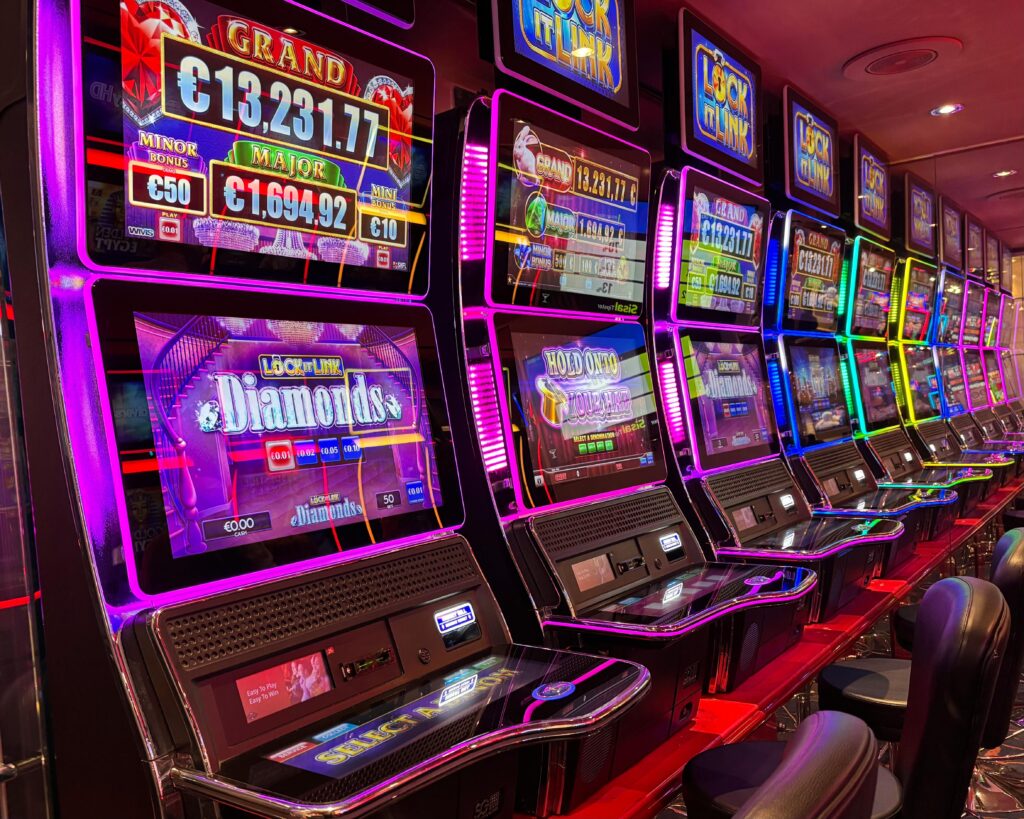
Slot games go far beyond basic gamification. They are built entirely around continuous engagement loops, where every spin delivers feedback – whether it’s a win, a near-miss, or a bonus trigger.
One of the key reasons slots are so effective is their ability to create what researchers describe as a highly immersive state. A study on player behavior found that slot experiences often induce a “flow-like” state, where users become deeply engaged and focused on the game.
This level of immersion is not accidental. It is the result of carefully designed systems that combine:
- Visual and audio stimulation
- Rapid gameplay cycles
- Frequent small rewards
Together, these elements create a feedback loop that keeps players engaged for extended periods.
The Power of Micro-Rewards and Near Misses
One of the most advanced aspects of slot gamification is the use of micro-rewards – small, frequent wins that maintain player interest. Even when players are not winning large amounts, the system provides enough positive reinforcement to sustain engagement.
Closely related is the concept of the near-miss effect, where outcomes that are close to a win create excitement and anticipation. As explored in research on how near-misses influence player motivation and behavior, these moments can significantly increase engagement by activating similar brain responses to actual wins.
These moments encourage continued play by suggesting that success is just within reach, even though each outcome is random.
This combination of micro-rewards and near-misses is a defining feature of modern gamification and has influenced design across multiple industries, from mobile apps to e-commerce platforms.
Technological Innovation and Game Design
Modern slot games are no longer simple mechanical systems – they are sophisticated digital products. Developers now integrate features commonly found in video games, including:
- Story-driven gameplay
- Interactive bonus rounds
- Personalized user experiences
- Cross-platform accessibility
These innovations reflect broader trends in gamification, where user engagement is enhanced through immersion and interactivity. As highlighted in how gamified slot mechanics leverage dopamine, progression systems, and near-miss effects, modern slot design increasingly overlaps with advanced behavioral design used in tech products.
For players and analysts alike, platforms featuring latest online slots overviews offer insight into how these mechanics are implemented across different games and providers.
A Model for Modern Gamification
What makes slot games unique is not just their use of gamification, but their refinement of it. While many industries are still experimenting with engagement strategies, slot developers have spent decades optimizing these systems.
This has positioned slot games as a benchmark for gamification design, influencing how other industries approach user engagement. From loyalty programs to mobile apps, many modern systems now replicate mechanics that were pioneered in gaming environments.
Conclusion
Slot games represent the most advanced form of gamification because they integrate psychology, technology, and design into a seamless experience. Through variable rewards, immersive environments, and continuous feedback loops, they demonstrate how powerful well-executed gamification can be.
As digital platforms continue to compete for attention, the principles refined in slot gaming are likely to shape the future of user engagement across industries. Understanding these systems is not just relevant for gaming – it provides insight into the evolving nature of digital interaction itself.