

Casino games rarely show up in serious design conversations unless the topic is monetization. That omission misses something important. This is a part of the industry that ships constantly, operates under tight constraints, and measures success with brutal clarity. Games launch, data comes in, and adjustments follow quickly.
Looking closely at newly released casino games reveals how experienced teams approach onboarding, pacing, and retention when there’s no lengthy narrative to lean on.
Simplicity beats complexity
Recent casino releases are strikingly conservative in their rule sets. Five-reel slots, scatter symbols, free-spin bonuses, and familiar table formats dominate. Innovation rarely appears in the rules; it shows up in how information is presented and how quickly players understand what matters.
Interaction designers assume players will not read instructions, tooltips, or onboarding screens. The first few interactions must communicate the core loop on their own. If a player can’t tell why something happened, or what might happen next, within the first spin or hand, engagement drops. Familiarity isn’t a creative failure here; it’s an intentional design constraint that allows teams to focus attention elsewhere.
Short sessions are the default
Most new casino games are designed around interruption. Sessions are expected to end abruptly, whether from notifications, real-world distractions, or simple loss of interest. As a result, games resolve actions quickly and avoid long buildup phases that punish players for stepping away.
When players do leave, games are easy to reenter, and animations are short or skippable. Progress isn’t locked behind extended commitment. For designers working on mobile or casual products, this is a useful reminder: designing for fragmented attention isn’t a compromise, it’s realism.
Reward cadence is tightly tuned
Casino games operate within fixed payout ranges, but that doesn’t mean rewards feel static. Designers manipulate volatility, anticipation, and timing to shape emotional pacing. Wins are spaced out, bonus triggers are teased visually before they hit, and near-miss moments are calibrated carefully.
What’s notable is how unsentimental this tuning is. If a reward pattern causes players to disengage, even if it feels exciting or clever, it gets adjusted or removed. Reward systems are treated as live components, not finished features, and the data decides whether a mechanic survives.
Live and social mechanics are growing
Live dealer games have become one of the most closely watched categories in recent casino releases, especially live blackjack and roulette. These games strip the interface down to essentials: video feed, betting controls, and light chat. There’s little customization and almost no friction.
The design insight here is restraint. Players aren’t drawn by complex social systems or deep interaction. They’re drawn by presence — knowing other people are there, even if they never say a word. For designers, this suggests that social texture can be achieved without heavy systems or forced collaboration.
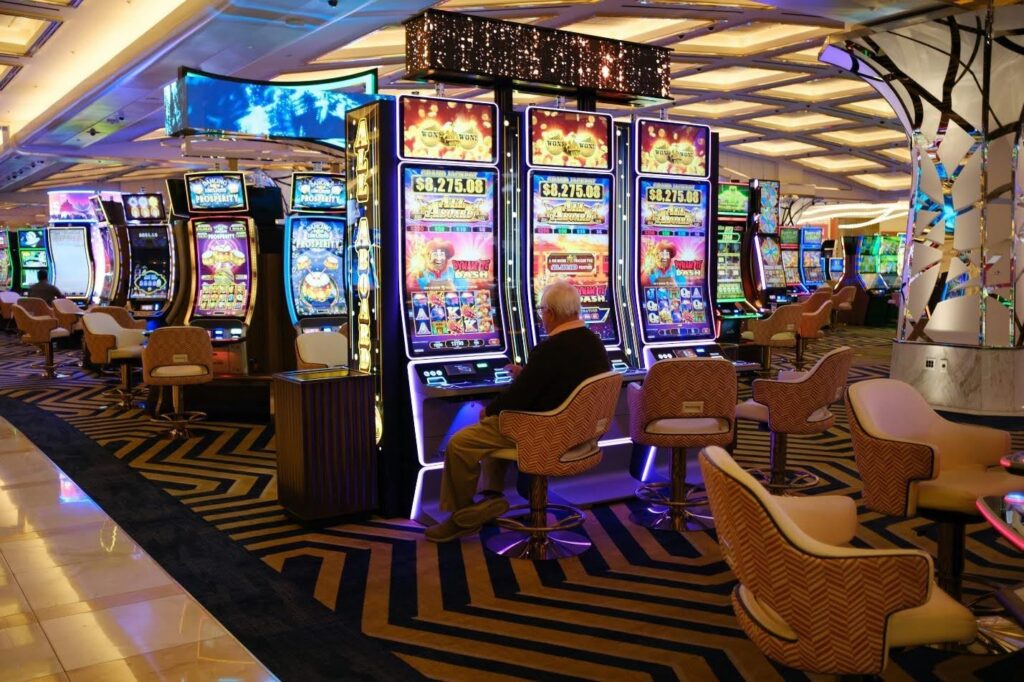
Iteration is fast
Casino games rarely stay static after launch. Developers regularly tweak bonus odds, animation timing, symbol emphasis, and even sound effects based on live performance data. These changes often happen quietly, without version notes or player-facing announcements.
A/B testing extends deep into the game itself. Reel speed, visual intensity, and feedback timing are all variables. Games are built with the expectation that they will change, sometimes significantly, after release. The design process doesn’t end at launch, it just accelerates.
Why this matters
Casino games operate under mathematical limits, regulatory oversight, and intense competition. Despite that, they continue to experiment with pacing, clarity, and engagement at a speed most studios can’t match.
For game designers working in other spaces, the lesson isn’t to copy mechanics. It’s to observe discipline. The most successful casino releases remove friction, respect attention, and let data, not taste, decide what stays. In an industry often obsessed with novelty, casino design makes a strong case for focus.