
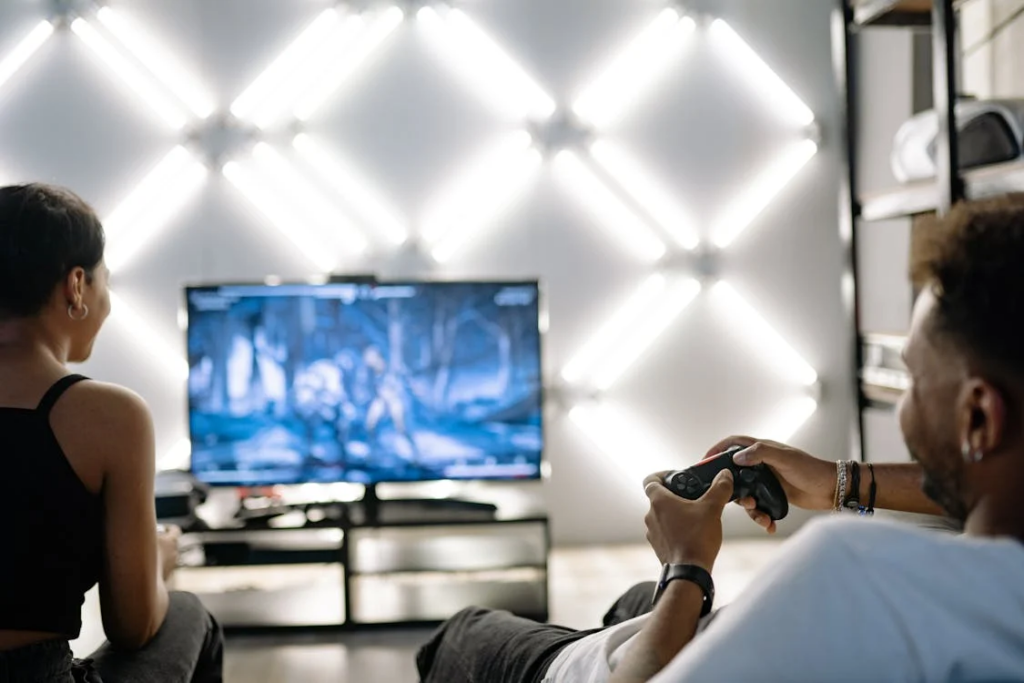
Whether you are building a simple setup or transforming an entire room for an immersive gaming experience at home, thoughtful choices in lighting, sound, layout, and décor can completely shape your experience.
With the right approach, your home can become a place where games feel more vivid and more engaging every time you play.
Table of Contents
ToggleChoosing the Right Room for Your Setup
Your gaming experience starts with choosing the right room. A good space gives you control over light, sound, and layout while helping you maintain comfort during long sessions.
Thinking About Space and Layout
The ideal room does not need to be large. It simply needs enough distance between you and your screen to provide a clear and comfortable viewing angle.
A rectangular or square room often works best because it creates a natural focus point for your display and speakers.
Controlling Light and Sound
Light and sound shape the atmosphere of a gaming room. Too much natural light can cause glare, but adjustable curtains or blackout panels can help you manage brightness.
Professional immersive environments rely on layered lighting and controlled acoustics to create depth and emotion. You can achieve a similar effect at home by reducing echoes with soft materials and limiting outside distractions.
Planning for Technology Needs
A room with accessible outlets, room for cable runs, and enough wall space for mounting displays or speakers will save you from headaches.
Planning for extra devices, cooling, and cable management helps keep your setup tidy and efficient.
You may also wish to consider your future needs, as gaming technology continues to advance.
Building a Lighting System That Enhances Gameplay
Lighting transforms your gaming room more than most people realize. A few intentional choices can turn a plain area into a cinematic environment.
Creating Ambient Lighting
Ambient lighting behind your screen adds depth and reduces the contrast between a bright display and a dark room.
Products that react to on‑screen colors take this further. Reactive lighting systems mirror what is happening in your game, making the room feel connected to the action.
Adding Accent Lighting
Accent lights shape the room’s identity. Soft color‑shift strips, neon highlights, and diffused LEDs can all reinforce your preferred gaming aesthetic.
Even small lighting additions can redefine the overall vibe of a gaming space more effectively than large decorative pieces.
Creating a Sound Environment That Pulls You In
Sound plays a major role in immersion. Even small adjustments can make your games feel more alive.
Enhancing Speaker Positioning
Good speakers or a quality soundbar can deliver richer audio. Positioning them at ear level and slightly angled toward your seating area helps create a more cinematic audio field.
Spreading speakers evenly avoids dead zones and improves clarity.
Improving Noise Control
Soft furnishings like curtains, rugs, and cushioned chairs help absorb sound and reduce echoes. This makes voices, effects, and music clearer.
Blocking outside noise also helps you stay focused during intense or emotional moments.
Adding Physical Feedback
Haptic gear takes sound beyond hearing and into physical sensation. Modern haptic cushions and headsets let you feel explosions, vibrations, and motion cues.
Adding something like this blends the digital and physical sides of play more deeply.
Designing a Layout That Supports Comfort and Performance
Your room’s layout affects everything from posture to immersion. A thoughtful arrangement keeps you comfortable, focused, and ready for long sessions.
Creating a Comfortable Seating Zone
Your chair or couch should sit at a distance where the screen fills enough of your view to be engaging without causing strain.
Adjustable monitor arms or tilting TV mounts will help you align your posture.
Good ergonomics prevent fatigue and keep you immersed longer.
Organizing Gear and Accessories
Storage is essential for maintaining a focused atmosphere.
Shelves for controllers, mounts for headsets, and drawers for cables keep everything accessible without creating clutter.
Making Long‑Term Upgrades
If you want to create a dedicated gaming environment with insulation, integrated lighting, and high‑quality finishes, you could explore professional basement remodeling services.
Yes, when you have unused square footage in a basement, why not turn the area into a customized gaming space that is built around comfort and immersion?
Personalizing Your Space With Décor and Interactive Elements
This final stage is where your gaming room becomes something unique and personal.
Choosing a Theme
Themes help bring cohesion to your space. You can go minimalist, retro, cyber‑inspired, or cozy lounge – depending on your taste.
Textures, colors, and shapes influence how a room feels emotionally.
Adding Displays and Collectibles
Lastly, display shelves, LED backlit cases, framed art, or retro console setups add personality.
Even just a few carefully chosen pieces can give your room identity without overwhelming it.