
Modern digital learning platforms need more than a basic app. They require serious architecture. Education platforms today must support massive user bases, deliver video content smoothly, handle analytics, and plug into a dozen other systems. This piece looks at engineering partners who build scalable education platforms. We’re not talking about vendors who just skin an LMS template.
What Education Software Development Companies Actually Build
There’s a real gap between template-based LMS providers and actual software engineering firms. The template guys sell you a configured product. Engineering companies build the systems from the ground up.
Digital learning platforms often need custom backend logic, specific integrations, and infrastructure that actually scales when class sizes explode. According to our analysts, the custom route makes sense once you hit a certain size or have unique workflows.
Core Components of Digital Learning Platforms
These platforms are complex beasts. They combine user management, content delivery, and infrastructure services all in one. The system needs to handle thousands of users hitting it at 9 AM on a Monday. Performance can’t tank under load. And it has to play nice with external tools like Zoom or authentication providers.
Engineering teams have to design backend systems that stay reliable and don’t become a maintenance nightmare. The main technical pieces include:
- Backend systems that manage users, content, and all the core platform logic;
- Smooth integration with video streaming services, authentication providers, and third-party educational tools;
- Infrastructure built to support a high number of concurrent users without buckling;
- Content delivery systems that support structured learning paths and workflows;
- Monitoring and maintenance setups that keep the platform reliable over time.
These components are the technical foundation. Without them, you don’t have a scalable platform.
Key Criteria for Choosing an Education Software Development Partner
Picking the wrong vendor messes with your scalability, your stability, and how the platform evolves. You need to look past the sales deck. Engineering capability determines whether your learning platform can scale and stay stable over the long haul.
Education platforms almost always evolve. New features get requested. Integrations need adding. Performance needs tweaking. A vendor with actual platform engineering experience lowers your technical risk.
Technical Capabilities That Matter Most
Honestly, engineering capability is what separates a platform that grows with you from one that holds you back. Education platforms evolve constantly, which means ongoing development, new integrations, and continuous performance improvements.
According to our data, picking a vendor with real platform experience reduces headaches down the road. The things you should evaluate:
- Verifiable experience building custom education platforms and LMS systems, not just configuring existing ones;
- Demonstrated ability to design backend infrastructure that actually scales;
- Track record integrating external learning tools and services into a cohesive platform;
- Capacity to support ongoing maintenance and continued development post-launch;
- Engineering experience specifically with cloud infrastructure and systems that scale.
These factors tell you whether a vendor can support your platform as it grows.
3 Notable Education Software Development Firms
We selected these firms based on their platform development experience, engineering capabilities, and focus on education software delivery. They’re not template jockeys. They build systems. Each has a different flavor in terms of specialization and engineering focus, but all three can handle the heavy lifting.
Geniusee
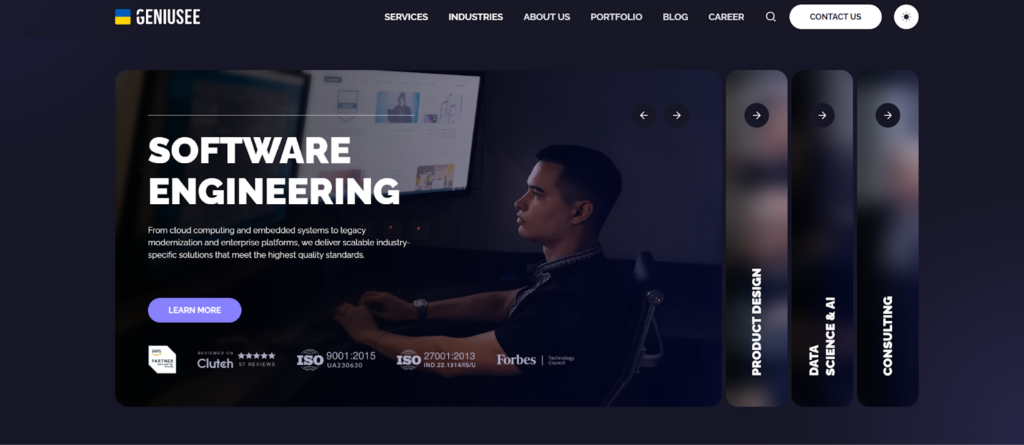
Geniusee is a custom software development shop founded in 2017. They’ve grown to over 200 engineers and delivered 180+ software products. They have a dedicated EdTech practice that focuses on building scalable education platforms, LMS systems, and digital learning infrastructure. Geniusee provides dedicated engineering services through its Geniusee Education software development practice, focusing on custom learning platforms, scalable backend systems, and cloud infrastructure. They operate as a full-cycle product development partner, not a template vendor.
They work across the stack. Custom LMS development, virtual classrooms, tutor platforms, you name it. Their platforms typically include learner management, content delivery systems, analytics, and user authentication. They’re also an AWS Advanced Tier Services Partner with Education Competency, which matters because EdTech platforms live or die on cloud infrastructure. They handle DevOps, post-release support, and platform scaling.
Key Strengths
Geniusee focuses on building scalable education platforms and supporting them across the full lifecycle. Their engineering teams handle platform architecture, integrations, and long-term system stability. According to our analysts, their strengths include:
- Building custom LMS and education platform systems tailored to specific needs;
- Backend engineering that supports scalable learning platforms under real-world loads;
- Integrating third-party learning tools and cloud infrastructure seamlessly;
- Providing engineering support across the entire platform lifecycle, including scaling phases.
This makes Geniusee a solid pick for scalable education platform development.
N-iX
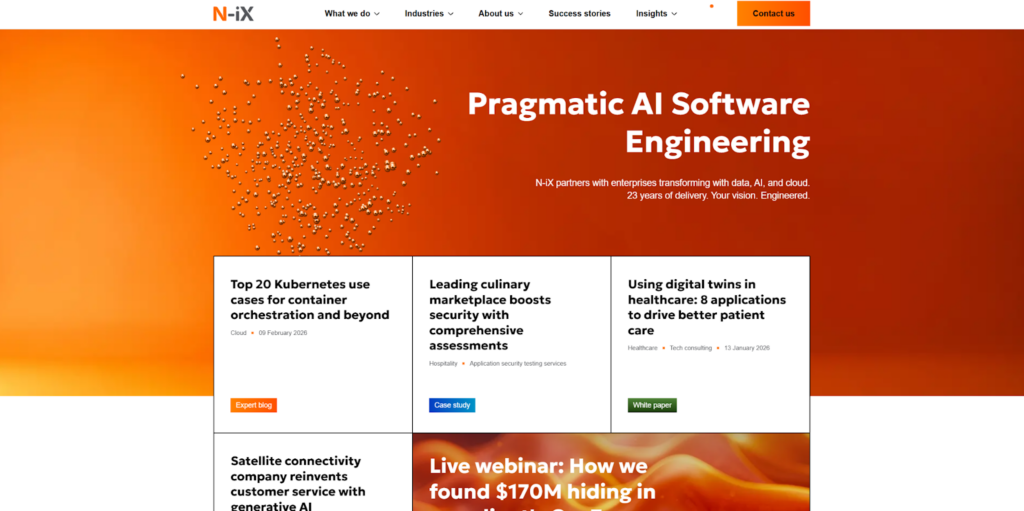
N-iX is an enterprise software engineering company with significant experience in education platform development. They build custom LMS solutions, learning platforms, and student information systems. Their focus is on cloud-native infrastructure and systems that scale for large organizations. They work with both enterprise clients and growing EdTech companies.
They bring experience in cloud infrastructure and building systems that handle load. Their education work typically involves backend engineering, platform architecture, and integration with existing enterprise ecosystems. They’re positioned as an engineering partner for organizations that need reliability at scale.
Key Strengths
N-iX focuses on engineering scalable education platforms for the enterprise space. Their strengths include:
- Engineering custom LMS and education platform systems from the ground up;
- Developing cloud-native infrastructure optimized for education workloads;
- Building backend systems specifically engineered for scalability;
- Supporting platform development and maintenance across the full lifecycle.
N-iX fits enterprise-level education platform engineering needs.
Binary Studio
Binary Studio is a software development partner that builds education platforms and SaaS learning systems. They focus on scalable platform engineering and product development. Their work covers LMS systems, digital learning tools, and platform modernization projects. They bring product development experience to the table, which means they think about how the platform functions, not just the code.
Their platform engineering experience spans backend development, cloud infrastructure, and ongoing maintenance. They work with companies building new education products and those needing to scale existing platforms. According to our data, their strength lies in building systems that can grow without needing constant rewrites.
Key Strengths
Binary Studio focuses on scalable platform engineering with a product mindset. Their strengths include:
- Developing scalable education platform systems designed for growth;
- Backend engineering that supports complex digital learning products;
- Building and integrating cloud infrastructure for education platforms;
- Providing ongoing platform lifecycle engineering and maintenance.
Binary Studio fits projects focused on scalable education platform development.
How Education Platforms Scale Over Time
Launching is just the start. Learning platforms evolve constantly after they go live. User numbers grow. Features get added. The platform needs to handle more load, more data, and more integrations. This is where engineering support becomes make-or-break.
Platform Evolution and Long-Term Engineering Needs
Education platforms don’t stay static. User numbers climb, platform features expand, and the whole thing needs to keep running smoothly. Engineering teams have to ensure stability while adding new capabilities. According to our analysts, long-term engineering support is often the difference between a platform that thrives and one that crumbles. Key lifecycle factors include:
- Scaling the platform as user numbers increase year over year;
- Optimizing infrastructure and tuning performance as load changes;
- Integrating new platform features and third-party services over time;
- Providing ongoing maintenance and making continuous system improvements;
- Supporting continuous backend development and regular platform updates.
This is why picking the right engineering partner upfront matters so much.
Conclusion
Education platforms live or die on engineering quality. The backend systems, infrastructure, and integrations determine whether a platform stays stable and scales when needed. You can’t fake scalability.
The companies listed above specialize in building scalable education platforms, not selling templates. Picking the right one depends on your specific platform requirements, your technical needs, and where you want to be in three years. Choose accordingly.