
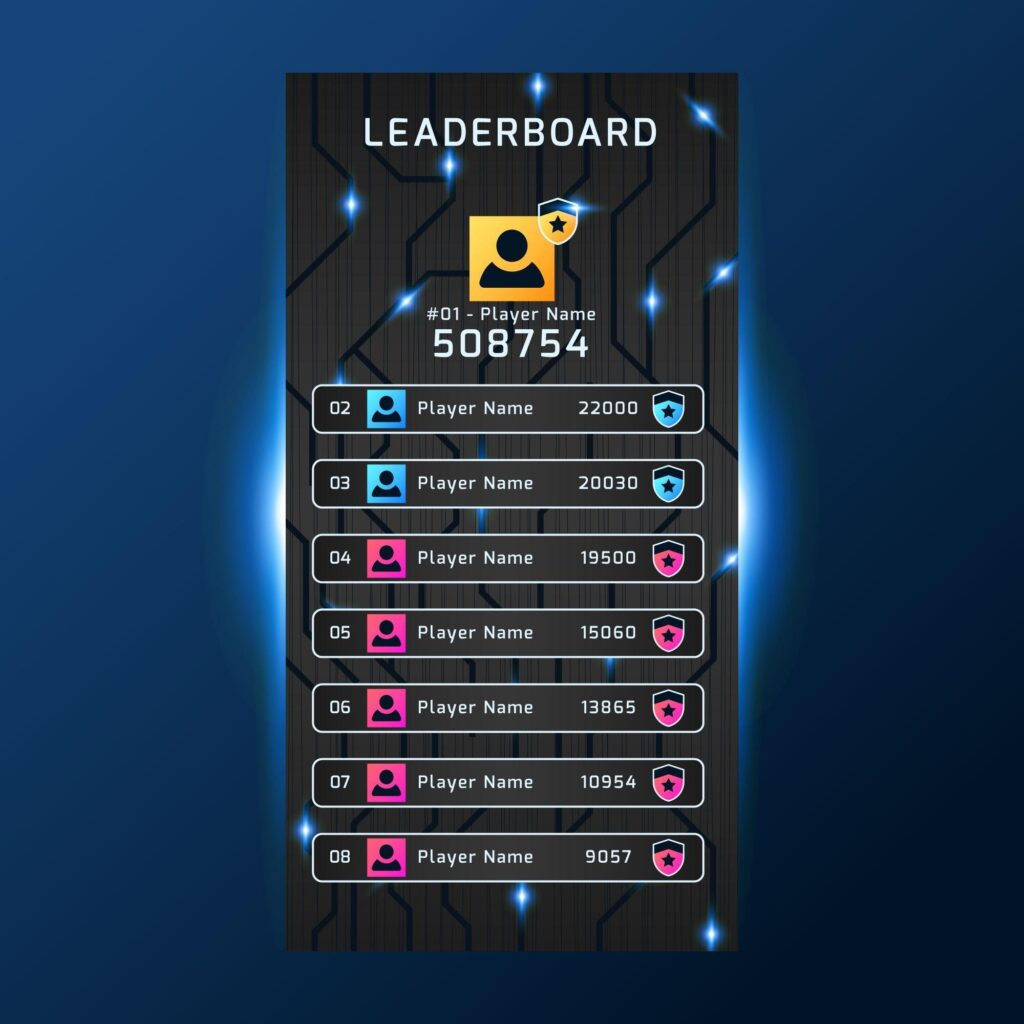
Live tournaments compete for attention across multiple screens and platforms. If that attention drops, participation follows. Leaderboards in live tournaments address this by making performance visible and giving both participants and audiences a reason to stay engaged. Without a clear ranking, competition lacks structure. Whether you are running esports events, sports activations, or gamified business experiences, visible ranking systems help shape behavior, sustain interaction, and keep focus on what matters.
What Are Leaderboards and Why They Matter
A leaderboard is a real-time ranking system that shows how participants are performing during a live event. It turns complex data into a format that is easy to follow, even in fast-moving environments.
Visibility is what makes this effective. When participants can see where they stand, they respond. Effort increases, decisions become more intentional, and activity levels rise. Audiences also benefit, gaining a clear view of how the competition is unfolding.
They do not just reflect performance; they influence it. Without visibility, performance has no context, and without context, competition loses impact.
How Leaderboards Drive Engagement in Live and Hybrid Events
In live environments, visibility drives interaction. As rankings shift, participants adjust their behavior, often increasing effort in response to small changes in position. This creates a continuous feedback loop that keeps both participants and audiences engaged.
In esports, ranking changes add tension, particularly when small movements affect qualification or elimination. Viewers track these shifts alongside gameplay, which keeps attention focused between key moments.
In corporate or gamified environments, ranking systems are often tied to actions such as session attendance, networking, or task completion. This creates a direct connection between behavior and outcome, encouraging consistent participation throughout the event.
The same dynamic is clear in online poker, where players track chip counts and table position continuously. Every change in standing influences decision-making, while constant awareness of position keeps both players and observers focused on the evolving competitive landscape.

U.S. audiences expect fast, data-rich experiences. From sports broadcasts to esports streams, real-time information is central to how people engage with content. A visible ranking system meets this expectation by providing a consistent layer of insight across platforms.
It also supports second-screen behavior. Many users follow standings while watching the main event, increasing interaction and time spent engaged. In hybrid settings, this structure aligns in-person and remote audiences, creating a shared experience across formats.
In these environments, passive viewing is rare. Users expect to track, compare, and respond in real time, and ranking systems enable all three.
Why Ranking Systems Change Behavior
These systems tap into fundamental drivers such as status, recognition, and progress. When rank is visible, behavior shifts.
Top performers focus on maintaining position. Mid-level participants respond to proximity, especially when the gap to the next rank is small. This near-miss effect often drives immediate re-engagement, as participants act quickly to close gaps. Visibility changes how people behave within the system.
However, poorly designed structures can reduce participation. When progress feels out of reach, lower-ranked participants may disengage.
Effective systems address this through segmentation, progress indicators, and multiple competitive phases. Grouping participants into tiers or categories improves feel achievable, which helps sustain activity across a wider audience.
Designing Effective Leaderboard Experiences
Static ranking tables no longer meet user expectations. Today’s systems function as active, data-driven components of the overall experience.
Real-time visualization allows participants and audiences to track performance instantly, creating faster feedback loops and maintaining attention. Second-screen integration extends engagement beyond the main event, creating additional touchpoints for interaction.
Design quality is critical. Delayed updates reduce trust, while unclear layouts make rankings difficult to interpret. Overemphasis on top performers can also limit impact, as most participants are not competing for first place.
Segmentation and clarity are essential. When users understand where they stand and believe they can improve, they are more likely to stay engaged.
These systems have evolved from passive displays into tools that actively shape interaction and participation.
Why Leaderboards Still Deliver Results
Visible ranking systems continue to perform because they directly influence behavior. Participants return to track their position, compare progress, and adjust their actions.
This drives repeat interaction and sustained involvement throughout the event. In gamified environments, it also supports behavior change by linking activity to visible outcomes.
For event organizers and product teams, this translates into stronger retention, higher activity levels, and clearer performance insights. It becomes more than an engagement feature. It is a mechanism for influencing measurable outcomes.
Key Takeaway
Leaderboards in live tournaments remain essential because they combine visibility, competition, and immediate feedback in a single system. As live and hybrid experiences continue to evolve, the ability to guide attention and influence behavior becomes more valuable. Visible ranking provides that structure. In competitive environments, attention follows visibility. Leaderboards give you control over both.