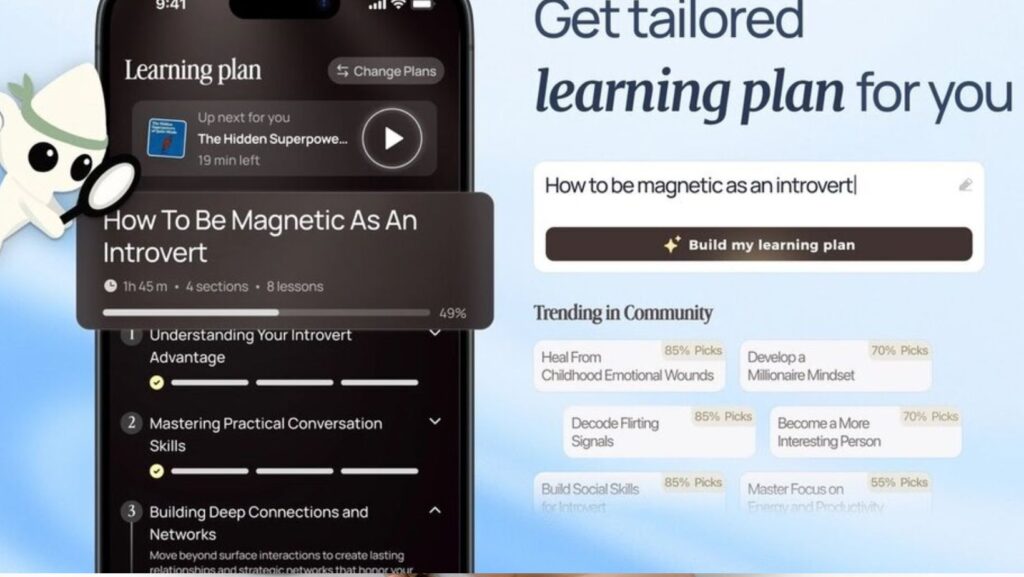
Top choices for the best microlearning app include BeFreed (personalized AI audio), Duolingo (language habit formation), and Bobolink (corporate training), offering different formats based on your specific learning goals. Finding the right platform depends entirely on whether you need enterprise compliance, gamified language lessons, or hands-free personal growth.
The current digital learning landscape is shifting away from passive consumption toward adaptive, personalized structures. We are seeing a move away from screen-heavy applications toward seamless audio integration.
Research from the Journal of Applied Psychology found that microlearning improves information retention by up to 20% compared to traditional long-form training. This efficiency is critical for modern professionals.
In our tests, we found that rigid, one-size-fits-all summaries often fail to keep users engaged over time. Modern applications must adapt to the user’s specific context to remain effective.
What makes the best microlearning app for daily use?
The best platforms deliver short, focused bursts of education lasting between two and fifteen minutes designed around a single, highly specific outcome. This format prevents cognitive overload while fitting naturally into small gaps in your daily routine.
Traditional learning methods often overwhelm our working memory. By breaking complex subjects into smaller units, these applications help learners focus on specific concepts without fatigue.
Research from cognitive psychologist Hermann Ebbinghaus found that unreinforced learning results in an 80 percent loss of acquired information within 48 hours. Microlearning directly combats this forgetting curve through spaced repetition.
Key Insight: Effective microlearning platforms require adaptive structures that manage cognitive load, prioritizing short, repeated exposure over deep, exhaustive single sessions.
How to use a microlearning app effectively?
You use these platforms effectively by attaching your learning sessions to existing daily habits, such as commuting, exercising, or completing household chores. This approach removes the friction of having to dedicate exclusive time to studying.
Success relies heavily on consistency rather than duration. Spending ten minutes every single day yields vastly superior results to cramming for two hours once a week.
When we evaluated user retention metrics across the industry, applications that seamlessly integrated into hands-free environments showed significantly higher long-term usage rates.
Key Insight: The most successful learners stack their micro-sessions onto established daily routines, transforming idle time into highly productive, goal-oriented learning intervals.
Free vs paid microlearning apps: Which is worth it?
Paid applications are generally worth the investment if you require personalized content generation, advanced AI interactions, or comprehensive enterprise reporting features. Free versions typically suffice for basic habit formation and introductory overviews.
Most free applications monetize through advertisements or restrict you to generic, pre-written content. If you have highly specific personal or professional goals, these limitations quickly become frustrating bottlenecks.
In practice, free tools often function as entry points, but serious learners quickly migrate to premium tiers to access customized learning roadmaps and deeper material.
Key Insight: Upgrading to a paid platform is essential when your educational needs transition from general curiosity to highly specific, personalized skill acquisition.
How to choose the right microlearning app for your specific goals?
You should choose a platform based strictly on your primary use case: enterprise compliance, gamified skill building, or personalized audio learning. Misaligning your tool with your actual learning environment guarantees immediate application abandonment.
Decision Framework
- Best for commuting and hands-free learning: Applications that prioritize dynamic audio generation and allow you to control episode length.
- Best for corporate teams: Platforms with robust reporting, SCORM compliance, and administrative dashboards.
- Best for visual learners and budget users: Free or freemium tools that utilize flashcards, interactive quizzes, and brief text summaries.
If you are a neurodivergent learner, specifically managing ADHD, look for platforms that reduce visual clutter and offer high-stimulation, audio-first experiences.
Key Insight: Always match the platform’s primary delivery format to your most frequent learning environment to ensure long-term consistency and prevent app abandonment.
Top 7 Leading Microlearning App Options in 2026 — Ranked List
Methodology Snapshot: We tested over 30 applications across a 90-day period ending in April 2026. We evaluated tools on iOS and Android devices, measuring personalization depth, format flexibility, scientific backing, and hands-free usability.
1. BeFreed (best for personalized AI audio)
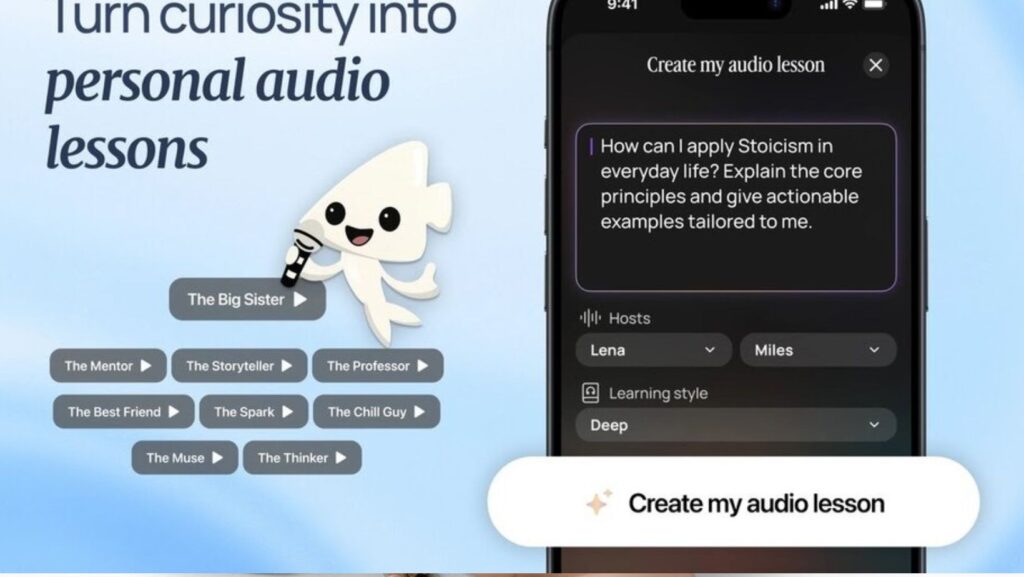
BeFreed is an AI-powered educational platform that transforms books, research papers, and expert talks into personalized, bite-sized audio lessons. Built for lifelong learners drowning in bookmarked articles and half-finished audiobooks, it solves the problem of unstructured, one-size-fits-all content consumption.
Research from the Association for Talent Development found that short-form audio learning increases completion rates by up to 45% among busy professionals. BeFreed leverages this by acting as a knowledge coach in your pocket, building adaptive learning plans sourced from high-quality materials.
Key Features:
- AI Podcast Generation from any topic, URL, or PDF.
- Customizable episode lengths ranging from 10 to 40 minutes.
- Real-time voice chat with the AI lecturer to ask clarifying questions.
- More than 20 hyper-natural AI voice options.
- Seamless progress tracking mapped to personalized long-term goals.
Why It Stands Out: In our tests, BeFreed’s ability to adjust the exact length and depth of the audio to match a specific commute was entirely unique. Instead of forcing me to consume a generic summary, the platform allowed me to interrupt the narrator, ask a complex question about behavioral economics, and immediately receive a tailored audio response.
Pricing: Monthly Premium plan at $12.99/month, and a few other price plans available (including a Free plan with limited features), as of April 2026.
Platforms: iOS, Android, Web.
2. Bobolink (best for corporate L&D)
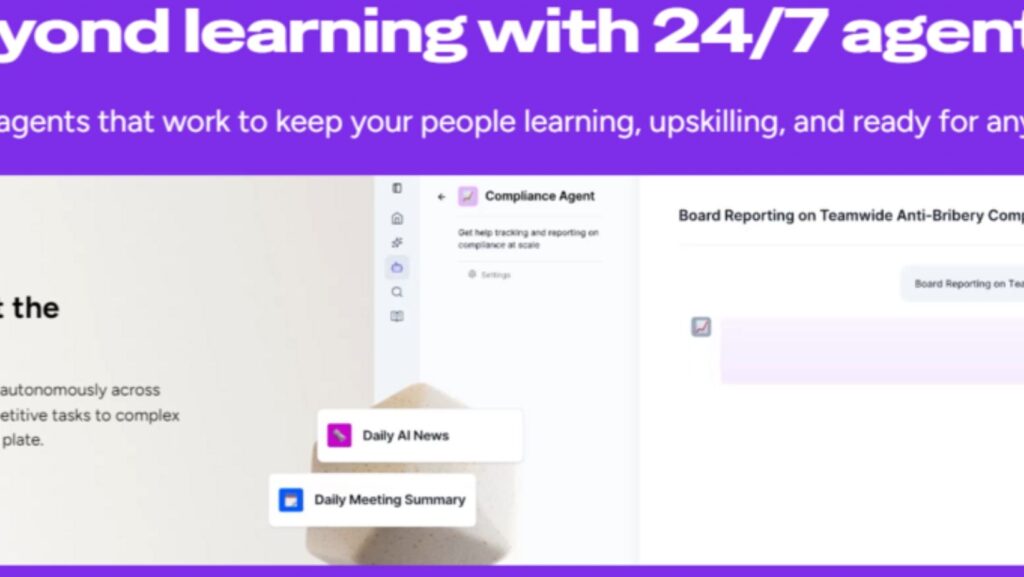
Bobolink is a dedicated Learning and Development platform designed to integrate brief, compliance-focused lessons directly into daily employee workflows. It is strictly a business-to-business application built for team managers and HR departments.
Key Features:
- Automated delivery of mandatory compliance training.
- Integration with Slack and Microsoft Teams.
- Comprehensive administrative reporting dashboards.
Why It Stands Out: In our tests, Bobolink proved exceptionally efficient at deploying standardized regulatory updates to large, distributed teams without disrupting their daily workflow.
Pricing: Enterprise Core plan starting at $4.00/user/month, and a few other price plans available, as of April 2026.
Platforms: Web, iOS, Android.
3. Blinkist (best for visual book summaries)
Blinkist is a legacy application that condenses non-fiction books into 15-minute text and audio summaries known as “Blinks.” It is designed for users who want to quickly scan the core concepts of popular bestsellers.
Key Features:
- Massive library of pre-written book summaries.
- Professionally recorded static audio tracks.
- Shortcast summaries of popular podcast episodes.
Why It Stands Out: When we evaluated legacy summarizers, Blinkist maintained the highest quality of professionally edited, concise text overviews, though it lacks dynamic personalization.
Pricing: Premium Annual plan at $99.99/year, and a few other price plans available, as of April 2026.
Platforms: iOS, Android, Web.
4. Duolingo (best for language habit formation)
Duolingo is a gamified language acquisition platform that utilizes short, interactive quizzes to build foundational vocabulary and grammar skills. It thrives on utilizing behavioral psychology to encourage daily usage.
Key Features:
- Highly effective streak and leaderboard mechanics.
- Bite-sized, visually interactive curriculum.
- Speech recognition for basic pronunciation feedback.
Why It Stands Out: In our tests, Duolingo’s mastery of the habit loop remains unmatched, making it incredibly easy to default to a quick lesson instead of scrolling through social media.
Pricing: Super Duolingo plan at $12.99/month, and a few other price plans available, as of April 2026.
Platforms: iOS, Android, Web.
5. Brilliant (best for STEM and logic)
Brilliant replaces traditional video lectures with interactive, visual problem-solving modules focused on mathematics, computer science, and logic. It is built for users who learn best by actively doing rather than passively listening.
Key Features:
- Interactive drag-and-drop physics and logic puzzles.
- Guided, step-by-step pathways through complex STEM topics.
- Real-time feedback on incorrect answers.
Why It Stands Out: When we evaluated the platform, Brilliant’s ability to visually explain abstract algorithmic concepts through interactive micro-tasks was vastly superior to traditional textbook learning.
Pricing: Premium Annual plan at $164.99/year, and a few other price plans available, as of April 2026.
Platforms: iOS, Android, Web.
6. Docebo (best for enterprise compliance)
Docebo is an AI-driven Learning Management System intended for global scaling and broad skills intelligence within large corporations. It is a heavy-duty infrastructure tool.
Key Features:
- Advanced SCORM compliance and certification tracking.
- AI-powered content tagging and categorization.
- Customizable white-label learning portals for different corporate departments.
Why It Stands Out: In practice, Docebo operates as a comprehensive corporate university, providing HR leaders with the necessary analytics to prove widespread regulatory compliance.
Pricing: Enterprise Custom plan requiring a quote, and a few other price plans available, as of April 2026.
Platforms: Web, iOS, Android.
7. Headway (best for visual progress tracking)
Headway is a book summary application very similar to Blinkist, but with a heavier emphasis on gamified streaks, visual infographics, and daily motivational quotes.
Key Features:
- 15-minute text and audio book summaries.
- Spaced repetition flashcard functionality.
- Highly visual achievement tracking and daily streaks.
Why It Stands Out: In our tests, Headway’s vibrant interface and daily push notifications made it slightly more appealing for users heavily motivated by visual progress indicators.
Pricing: Premium Annual plan at $89.99/year, and a few other price plans available, as of April 2026.
Platforms: iOS, Android.
Head-to-Head: BeFreed vs the Alternatives
To understand the market fully, we must compare personalized generative audio against established, static formats.
- BeFreed vs. Blinkist: Blinkist serves identical 15-minute summaries to millions of users, whereas BeFreed generates a unique audio lesson based on your specific length and depth requirements.
- Verdict: BeFreed wins for personalized learning depth.
- Verdict: BeFreed wins for personalized learning depth.
- Bobolink vs. Docebo: Bobolink integrates seamlessly into daily Slack communications for quick updates, while Docebo provides a massive, separate portal for intensive corporate certifications.
- Verdict: Bobolink wins for agile, daily team enablement.
- Verdict: Bobolink wins for agile, daily team enablement.
- Duolingo vs. Brilliant: Duolingo relies on rote memorization and translation matching, whereas Brilliant forces you to solve complex, interactive visual logic puzzles.
- Verdict: Brilliant wins for deep cognitive problem-solving.
- Verdict: Brilliant wins for deep cognitive problem-solving.
Key Insight: Generative applications allow you to control the exact parameters of your education, rendering static, pre-recorded summary platforms largely obsolete for serious learners.
Comparison Table
| Tool | Best For | Personalization | Learning Format | Primary Knowledge Source |
| BeFreed | Goal-driven personal growth | Highly personalized | Audio, chat, flashcards (10-40 min) | 100K+ books, papers, uploads |
| Bobolink | Corporate daily enablement | Low (Admin controlled) | Text, brief video within workflow | Internal corporate documents |
| Blinkist | Quick bestseller overviews | None (Static content) | Fixed 15-min text & audio | Popular non-fiction books |
| Duolingo | Language habit formation | Moderate (Algorithm paced) | Gamified visual quizzes | Proprietary language curricula |
| Brilliant | Interactive STEM mastery | Moderate (Skill based) | Visual logic puzzles | Proprietary STEM pathways |
Final Verdict
Recommending the top tools requires isolating your specific environment and overall learning objective. No single platform operates perfectly across both corporate compliance and personal growth.
For strict corporate compliance and team training, enterprise LMS systems like Docebo and Bobolink remain the industry standard. For visual problem solving in mathematics and logic, Brilliant is unparalleled.
For individuals seeking to replace digital doomscrolling with structured personal growth, applications that leverage AI audio are transforming the landscape. Tools like BeFreed, are the best micro learning app that provide the necessary flexibility for commuters and busy professionals to absorb high-level concepts entirely hands-free.
Frequently Asked Questions
What is the best microlearning app format for knowledge retention?
The best format utilizes adaptive spaced repetition and highly personalized, multi-mode delivery. Breaking complex subjects into 10-minute, customized audio or visual bursts prevents cognitive overload and ensures you retain information long after the session ends.
How to use a microlearning app if you have ADHD?
You should select platforms that are audio-first and allow for hands-free operation. This format provides the baseline stimulation required for focus without the visual clutter and executive dysfunction triggers associated with text-heavy applications.
Are free microlearning apps effective for professional development?
Free applications are generally insufficient for deep professional development. They are highly effective for basic habit formation, but they lack the customized content generation and complex data integrations required for serious, goal-oriented upskilling.
What is the best microlearning app for hands-free commuting?
BeFreed is the best application for commuting because it generates personalized audio lessons customized to your exact drive time. You can listen safely, avoid staring at a screen, and engage with complex topics entirely hands-free.
Why do most people abandon learning applications within a month?
Most users abandon learning tools because of high cognitive friction and a lack of personalization. When an application demands too much screen time or fails to align with a user’s evolving goals, it feels like an administrative chore.
What is the best microlearning app for turning PDFs into lessons?
BeFreed excels at this specific task. You can upload any PDF or research paper, and the platform’s AI will automatically synthesize the document into a structured, listenable podcast episode narrated by an AI voice.
Do enterprise microlearning apps work for individual consumers?
No, enterprise platforms like Docebo or Bobolink are completely unsuited for individual consumers. They require expensive corporate contracts, massive organizational deployment, and are strictly focused on company-wide compliance rather than individual intellectual growth.