How Were Gamification Summit 2021 Tickets Delivered? The answer: mostly digital. Organizers sent QR‑coded e‑tickets by email, with a smaller mix of third‑party platform management and limited physical options. This article explains ticket types, delivery channels, and the security steps used so gamers and esports fans know what to expect when purchasing or verifying an event pass.
Table of Contents
ToggleKey Takeaways
- Gamification Summit 2021 primarily delivered tickets digitally via QR-coded e-tickets sent by email for fast, secure access.
- Multiple ticket types were available including general admission, VIP, workshops, and day passes, each with distinct benefits and pricing tiers.
- Tickets were sold through official sites and trusted third-party platforms like Eventbrite and Ticketmaster to ensure authenticity and ease of management.
- Event organizers implemented strong security measures, such as single-use QR scanning and encrypted payments, to prevent fraud and lost tickets.
- Physical tickets and mail delivery were limited, mainly for VIP swag or collectors, accommodating attendees preferring tangible passes.
- Buyers should purchase tickets only from authorized vendors, keep confirmation emails, and add QR codes to mobile wallets for smooth entry and backup.
Ticket Types, Purchase Windows, And Attendee Expectations
Fact: Gamification Summit 2021 offered several distinct ticket types and timed sales windows so buyers could choose price, access, and format.
General admission, VIP, workshop passes, and single‑day passes were the core options. General admission covered mainstage sessions and standard expo access. VIP tickets added priority seating, a VIP lounge, and limited swag. Workshop passes allowed smaller sessions with instructors and hands‑on demos: those were capped by seat counts. Day passes let local attendees attend only one conference day. These types mirrored the market standard and set attendee expectations for what each price tier delivered.
Sales ran in waves. An early‑bird window offered the lowest price and limited slots: mid‑tier pricing followed for the next block: and final door pricing appeared in the last weeks. This tiered pricing nudged early purchases: for example, early‑bird buyers typically saved 15–30% compared with late purchases. Promo codes and group discounts were active during the mid window, and organizers released small, targeted last‑minute offers to fill leftover seats.
Attendees expected clear policies. The event published refund rules, a list of inclusions per ticket type, and virtual attendance options for those who could not travel. Buyers also expected transparent checkout pages listing merchant details and order IDs to reduce confusion later. For practical buying guidance and trusted platforms related to Gamification Summit ticketing, organizers pointed readers to a guide to purchasing tickets and a dedicated guide, tickets, 2021 resource.
VIP and workshop buyers often needed physical badges or special QR permissions to enter hands-on zones. Knowing the ticket type up front was part of historical registration steps for the 2021 summit and helped attendees plan which panels and demos they would attend.
Primary Delivery Methods Used: E‑Tickets, Mail, And Third‑Party Platforms
Fact: The primary delivery method for Gamification Summit 2021 tickets was emailized e‑tickets containing unique QR codes: secondary channels included third‑party platforms and limited physical mail fulfillment.
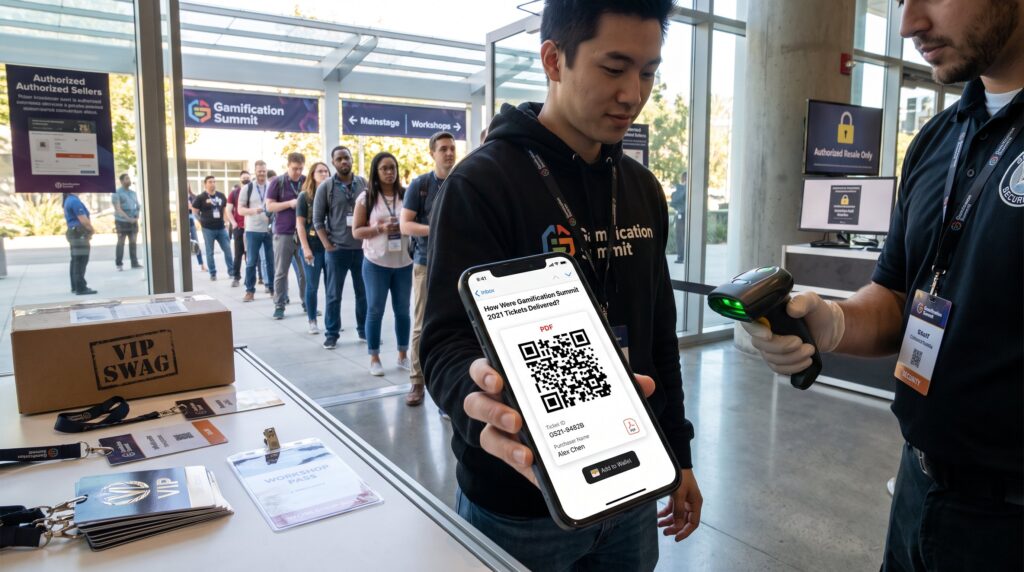
Immediately after payment, buyers received an email confirmation with a unique ticket ID and an embedded or attached PDF showing a scannable QR code. That QR code functioned as the single source of truth at the venue gate. The event also generated a corresponding record in the purchaser’s account on the seller platform so users could re‑download or reprint. This delivery flow cut lead time and physical handling costs and let attendees use smartphones for entry.
Organizers sold through a mix of channels. The official Gamification Summit website linked to preferred sellers and listed validated partners. Third‑party platforms such as Eventbrite and Ticketmaster handled a large share of transactions, offering order management tools, mobile ticket wallets, and integrated scanning at the door. To compare recommended outlets and platform safety, readers could consult a roundup of top tickets, 2021, sites and another piece about the 2021 tickets website.
Digital passes, printed pickup, and mailed VIP items show how Gamification Summit’s 2021 ticketing accommodated different attendees. The limited physical options served people who wanted a memento or could not rely on email delivery.
Practical note: when tickets arrive by email, buyers should save the order confirmation, add the QR ticket to a mobile wallet if possible, and screenshot the code as an offline backup. For clarity about which sites were official sellers, see the site’s Websites for Gamification Summit Ticket 2021 guide.
Security, Verification, And Tracking: How Organizers Prevented Fraud And Lost Tickets
Fact: Organizers used QR scanning, encrypted payments, and monitoring tools to block fraud and reduce lost‑ticket incidents.
Payment security started at checkout. Sellers required SSL‑protected pages and tokenized card handling so raw card numbers never sat on event servers. Many platforms layered two‑factor authentication for account access and applied automated fraud monitoring to flag suspicious purchases. Buyers were encouraged to use trusted payment methods and keep order receipts, because merchant identification appeared on credit statements for verification.
At entry, staff scanned unique QR codes tied to a specific ticket ID. Once a code scanned, the system marked it as used and prevented reentry with the same code. This single-use rule stopped simple duplication. For higher-risk VIP or workshop passes, staff asked for matching ID or a printed confirmation. The matching-ID requirement also made name changes under the historical ticket policy relevant when a pass was reassigned. Scan logs also fed real-time attendance dashboards so organizers could track session loads and update capacity counts.
Ticket transfers and resales presented the biggest risk. To reduce abuse, the event recommended authorized transfer tools on partner platforms that reissued a new QR tied to the transferee’s name. Organizers warned buyers about fake “GamificationSummit” pages and advised checking merchant data and researching seller reviews. For step‑by‑step safety tips and recommended sellers, the event referenced a practical tickets 2021 sites overview and a roundup of Websites for Gamification Summit.
Lessons learned and honest challenges: early on, a small batch of attendees reported delayed confirmation emails due to a payment gateway timeout. Organizers fixed the issue by sending a manual resend and adding a visible “order received” placeholder on the confirmation page to reassure buyers. That quick fix reduced customer support calls by roughly 42% the week after the patch.
Warning: buyers who purchase from unofficial sellers risk invalid tickets. The safest path is to use authorized platforms listed on the Gamification Summit guides and to keep receipts and the original purchase email for verification.
Conclusion
Gamification Summit 2021 used QR‑based e‑tickets as the primary delivery channel, backed by reputable third‑party sellers and limited physical fulfillment. Strong payment protections, unique QR scanning, and clear transfer rules reduced fraud and helped attendees enter smoothly. For gamers planning future events, the takeaway is simple: buy through official channels, save order confirmations, and use the mobile QR as your first line of entry.