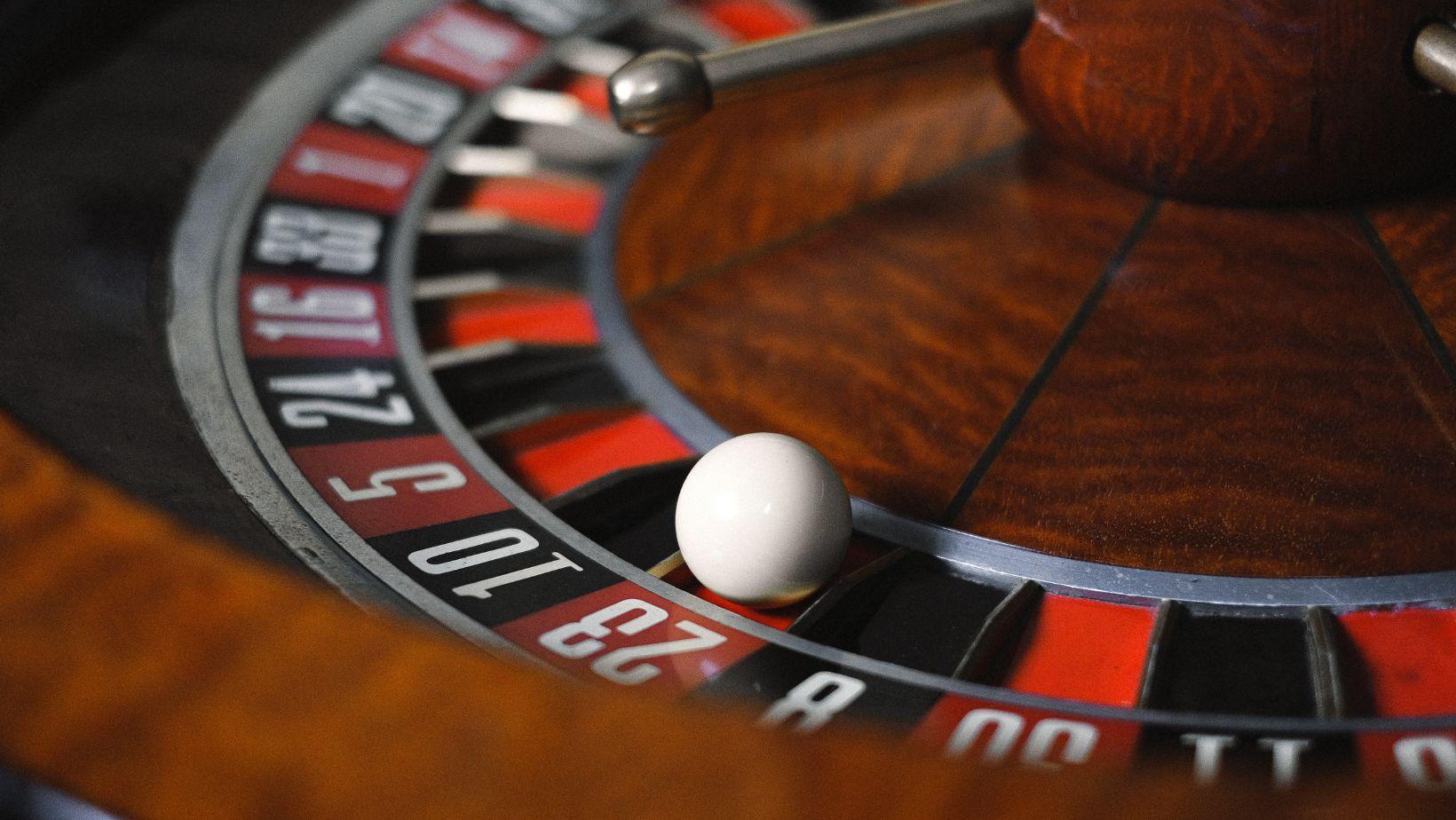

American roulette uses a wheel with 38 pockets: the numbers 1 through 36, plus 0 and 00. Most bets on this wheel carry the same mathematical disadvantage because their payouts are based on a 36-number structure while both green pockets remain possible. The five-number bet breaks that pattern. It covers 0, 00, 1, 2 and 3, pays 6 to 1, and produces a larger house edge than the other standard bets.
A player opening American roulette at SlotsVader may see this wager labelled First Five, Top Line, Five Line or Basket, depending on the software and table rules. The chip is placed where the zero section meets the first row of numbers. One stake then covers five pockets. Before confirming it, the player should check the displayed payout and make sure the wheel has both 0 and 00.
The shape of the layout explains why the wager exists. Numbers 1, 2 and 3 form the first street on the main grid. The 0 and 00 sit above that grid in the green section. A chip placed on the top boundary can touch all five positions, creating a group that has no direct equivalent elsewhere on the table.
Other inside bets use regular groups. A straight-up bet covers one number and pays 35 to 1. A split covers two neighbouring numbers and pays 17 to 1. A street covers three numbers and pays 11 to 1. A corner covers four numbers and pays 8 to 1. A six-line covers two adjacent streets and pays 5 to 1. Each payment follows the same underlying pattern on a double-zero wheel.
The five-number wager pays 6 to 1. A $10 winning stake therefore earns $60 in profit, and the original $10 is returned. The total amount received is $70. A losing result costs the full $10. Since five of the 38 pockets win, the probability of success on one spin is 5 divided by 38, or about 13.16 per cent.
Its expected result can be calculated across 38 theoretical spins with a one-unit bet each time. Five winning spins earn six units apiece, producing 30 units of profit. The other 33 spins lose one unit each, producing a loss of 33 units. The net result is minus three units from 38 units wagered. That equals a house edge of about 7.89 per cent.
Most standard American roulette wagers lose two theoretical units across the same 38-unit comparison. A straight-up bet wins once for 35 units and loses on 37 results, leaving minus two. An even-money bet wins on 18 numbers for 18 units and loses on 20 pockets, also leaving minus two. Their house edge is about 5.26 per cent.
The extra theoretical loss makes the five-number bet unusual. It does not merely combine more numbers into one convenient chip position. Its payout is one unit lower than the rate needed to match the normal American roulette house edge. A payment of 6.2 to 1 would preserve that 5.26 per cent disadvantage, but casino tables use whole-number chip payouts and normally list 6 to 1.
The difference can also be shown by covering the same five numbers with separate straight-up bets. Suppose the player puts $1 on 0, $1 on 00, and $1 on each of 1, 2 and 3. The total stake is $5. If one selected number wins, that chip earns $35 and returns its $1 stake. The other four chips lose. The net profit for the complete group is $31.
A single $5 five-number bet also wins on those five pockets. At 6 to 1, it earns $30 and returns the $5 stake. The net profit is $30. Both methods risk $5 and cover the same outcomes, but the five separate straight-up bets return one dollar more after a win.
Table minimums can affect this comparison. A physical casino may require the minimum inside stake on every straight-up number, making five separate chips more expensive than one top-line chip. An online table may permit very small denomination bets, so the player can reproduce the five-number coverage without raising the total stake. The betting interface should show the accepted amount before the wheel is spun.
The five-number bet is not the same as a five-number sector chosen from any part of the wheel. It is tied to the specific group 0, 00, 1, 2 and 3. Selecting five unrelated straight-up numbers creates five independent bets and keeps the usual 5.26 per cent house edge. The higher disadvantage comes from the top-line paytable, not from the number five itself.
It also differs from the three-number basket that may cover 0, 00 and 2 on some American layouts. A three-number wager paying 11 to 1 follows the standard American roulette house edge. The top-line version adds 1 and 3 but reduces the payment to 6 to 1. Players should read the highlighted numbers after placing the chip, since table graphics vary.
The two green pockets are treated as ordinary covered results for this wager. A ball landing on 0 or 00 wins, just as a result of 1, 2 or 3 does. There is no bonus for hitting a green number. The payout remains 6 to 1 for each of the five winning pockets.
Raising the bet does not change the percentage. A $1 top-line wager has the same 7.89 per cent house edge as a $100 wager under the same rules. The expected dollar cost scales with the amount risked. Over 100 dollars in total top-line stakes, the theoretical casino share is about $7.89, though a short session can finish far above or below that figure.
The five-number bet can still win several spins close together. It can also lose for a long sequence. The wheel does not adjust the next result because the previous spin landed outside the selected group. The chance remains five winning pockets from 38 on each new spin.
A recent run of 0, 00, 1, 2 or 3 does not make the group less likely on the next round. A long absence does not make it due. The bet should be assessed through its fixed coverage and payout rather than a pattern on the history board.
Its unusual house edge also matters when comparing American and European roulette. A European wheel has only one zero and 37 total pockets. The standard American five-number wager cannot be copied exactly because there is no 00. European layouts may offer a four-number first corner covering 0, 1, 2 and 3, but that is a different bet with another payout and probability.
Online interfaces sometimes place the five-number option in a list of special bets instead of requiring precise chip placement. Selecting it should highlight all five covered pockets. If the screen highlights only 0, 00 and 2, the chosen wager is the three-number basket, not the top line.
The settlement record can confirm what was accepted. It should show the stake, selected numbers, winning pocket, payout and total return. This is useful when two neighbouring betting areas are close together on a small mobile display.
The clearest comparison uses three checks: count the wheel pockets, confirm the covered numbers and read the profit payout. On a 38-pocket American wheel, 0-00-1-2-3 wins on five outcomes and pays only 6 to 1. That combination creates a 7.89 per cent house edge, compared with 5.26 per cent on most standard wagers. Its unusual cost comes from the payout, not from the green colour or the position at the top of the layout.