What is gamification and how does it work? Gamification uses game-design elements, points, badges, levels, leaderboards, quests, to make tasks feel like play. In gaming communities, it turns passive viewers into repeat contributors, turning routine actions (posting, moderating, donating) into measurable progress. This article explains why gamification matters for gamers, which mechanics actually move behavior, and how designers, streamers, and support teams can build reward systems that create real engagement without burning out the community.
Table of Contents
ToggleKey Takeaways
- Gamification uses game elements like points, badges, and leaderboards to transform tasks into engaging experiences that boost participation and retention.
- In gaming communities, clear progress indicators and achievable quests can increase user activity by motivating players to pursue visible status and goals.
- Effective gamification balances extrinsic rewards with intrinsic motivation by offering autonomy, mastery, and social connection to sustain long-term engagement.
- Designers should avoid overly repetitive reward systems that cause burnout by focusing on quick wins and meaningful milestones within 24 hours of play.
- Combining private progression with public recognition keeps both newcomers and veterans motivated, preventing discouragement from stagnant leaderboards.
- Successful gamification creates a feedback loop of cue, action, and reward that encourages habitual contributions and identity-building within the community.
Why Gamification Matters For Gaming Communities
Gamification increases participation, retention, and contribution quality in gaming communities.
Players respond to visible progress. When a forum shows experience points and ranks, casual posters often try one more post to climb a level. A clear example: small clans that add weekly quests see a 17% lift in event attendance within a month because members chase short, achievable goals.
Why this matters for esports and hobby communities: status and competition already drive player behavior in games. Gamification maps those instincts onto community actions, helping newcomers, reporting bugs, or contributing guides, so the community gains useful work while players gain status.
Practical warning: poorly tuned systems create grind. If rewards require 200 repetitive actions for a single title, many members quit rather than engage. Designers should aim for quick wins (first 3 levels under 24 hours of typical play) and clear milestones.
Related reading inside the network covers how gamification drives engagement across platforms and offers background ideas for community builders: read the article on How Gamification Drives to compare platform examples.
Core Mechanics And Practical Applications
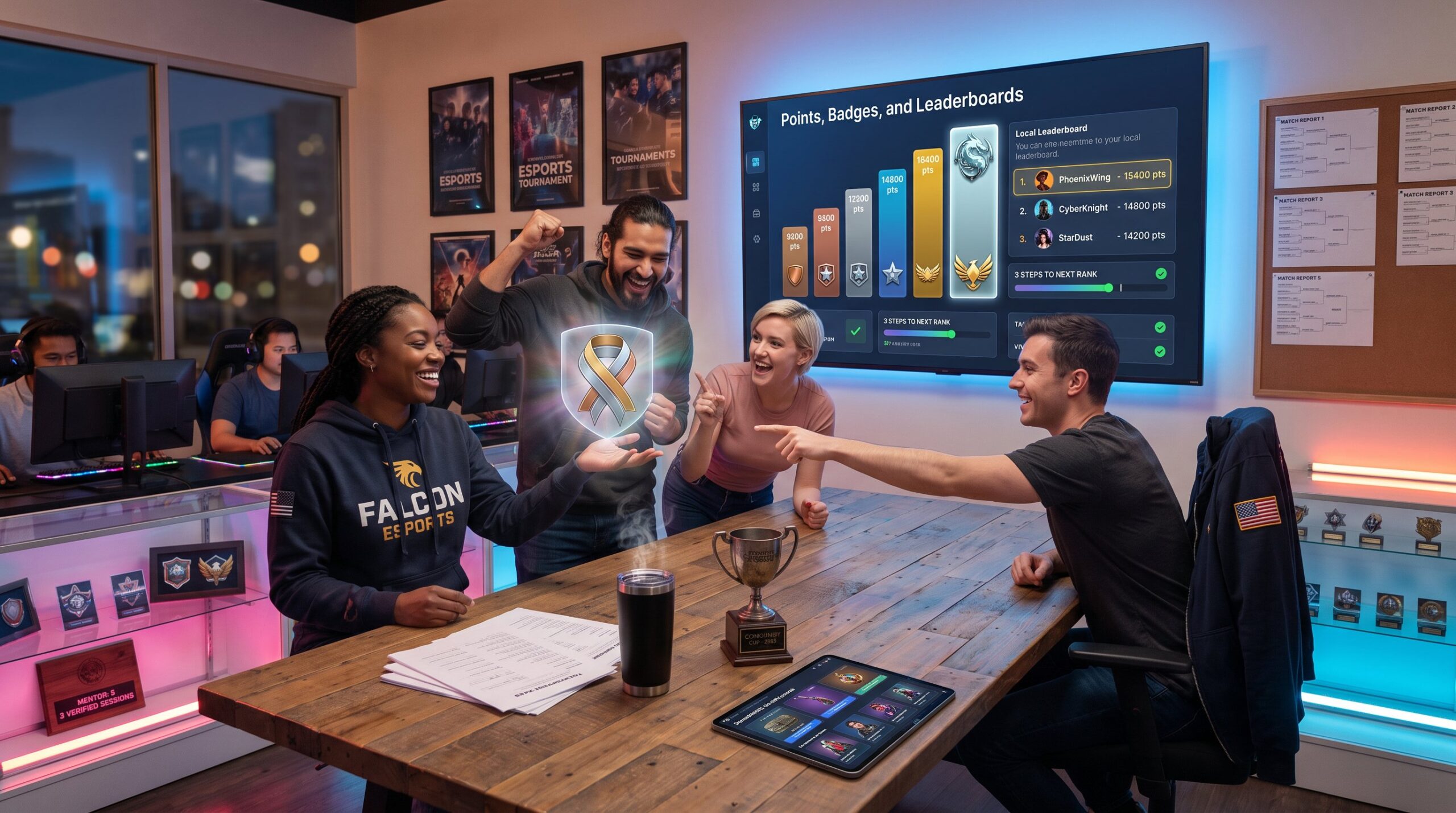
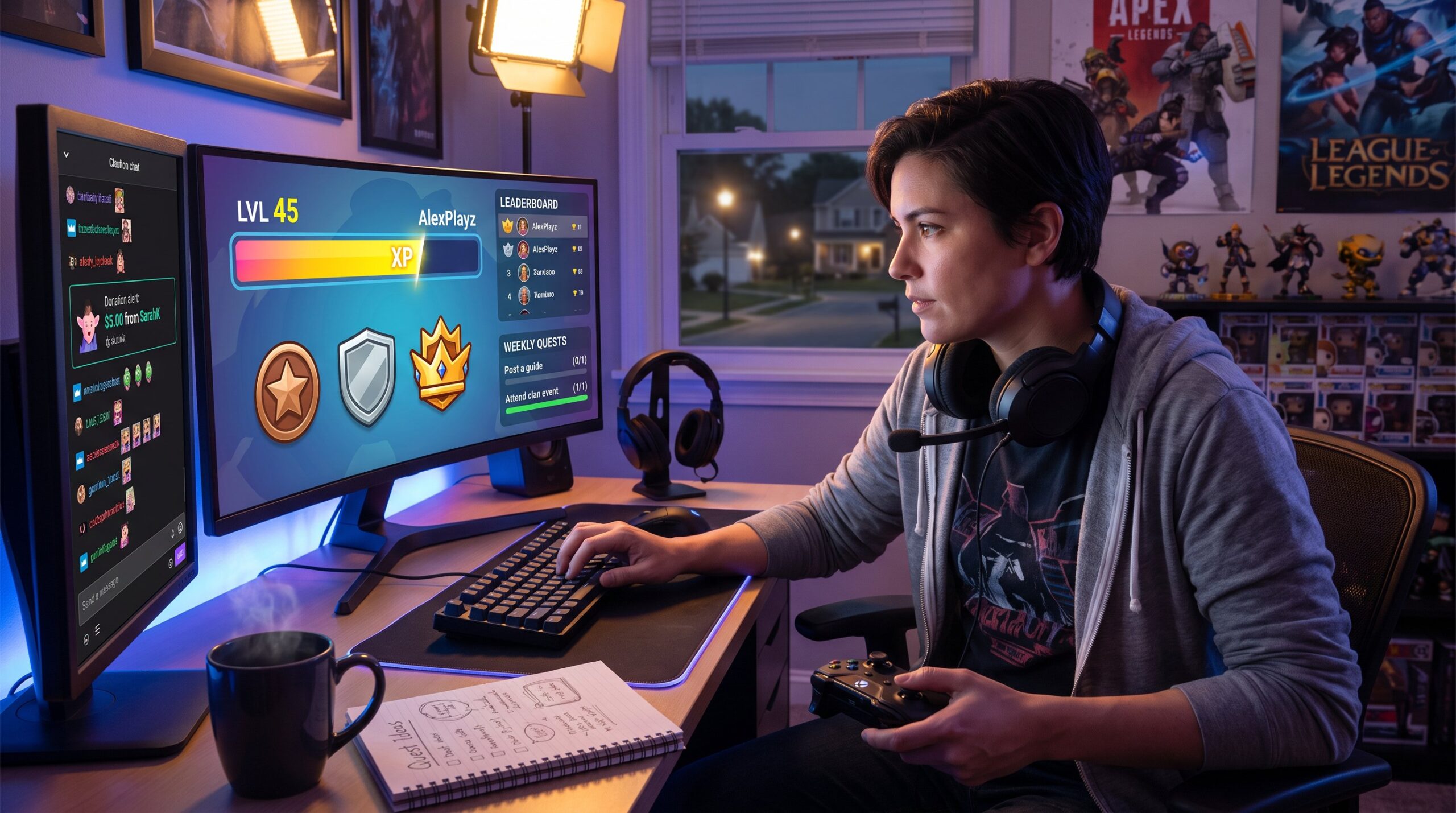
Points, XP, badges, levels, quests, streaks, and leaderboards are the core mechanics that change behavior.
These mechanics work because they create a loop: cue → action → feedback. A cue might be a notification about a weekly challenge: the action is answering a thread: the feedback is instant XP and a visual badge. That immediate feedback converts casual browsing into deliberate contribution.
Designers should pick mechanics to match desired outcomes. For quick community growth, use points and visible leaderboards. For improved help quality, tie badges to peer-reviewed answers. For recurring attendance, use streaks and seasonal unlocks.
Common pitfalls: over-reliance on public leaderboards can discourage newcomers when top positions never reset. Mix private progression (personal XP) with public markers (badges) to keep both newcomers and veterans engaged.
Further guidance on mechanics and examples appears in our explainer of core mechanics.
The Psychology Behind Gamification
Gamification capitalizes on human drives for achievement, recognition, and progress.
Answer up front: it works by layering extrinsic cues over intrinsic needs for competence and relatedness.
Mechanically, points and badges are extrinsic motivators that create short-term spikes in activity. Sustained engagement requires supporting intrinsic motivation, autonomy, mastery, and social connection. A community that offers choices (autonomy), clear skill paths (mastery), and social roles (relatedness) keeps members beyond the initial reward.
A clear danger is the overjustification effect: if players do helpful work only for points, their intrinsic motivation can decline once the points stop. To avoid this, combine small extrinsic rewards with tasks that cultivate competence: public feedback on answers, opportunities to mentor, and pathways to earned responsibilities.
Habit formation follows the cue→routine→reward model. Gamified loops create cues (notifications), reinforce routines (daily quests), and deliver rewards (badges). Over time, the routine can become internalized: a moderator who began for points may continue because moderating now feels rewarding and identity-forming.
Explore deeper behavioral science in the site’s psychology article for empirical foundations: The Psychology Behind.
Conclusion
Gamification is a practical toolkit: apply points, progression, and feedback to shape community behavior. It succeeds when the system rewards both quick wins and deep, identity-forming activities. Designers should measure retention, A/B test reward pacing, and avoid grind. When done well, gamification turns ordinary moments, first helpful post, first streamed win, into memorable steps on a longer player journey.