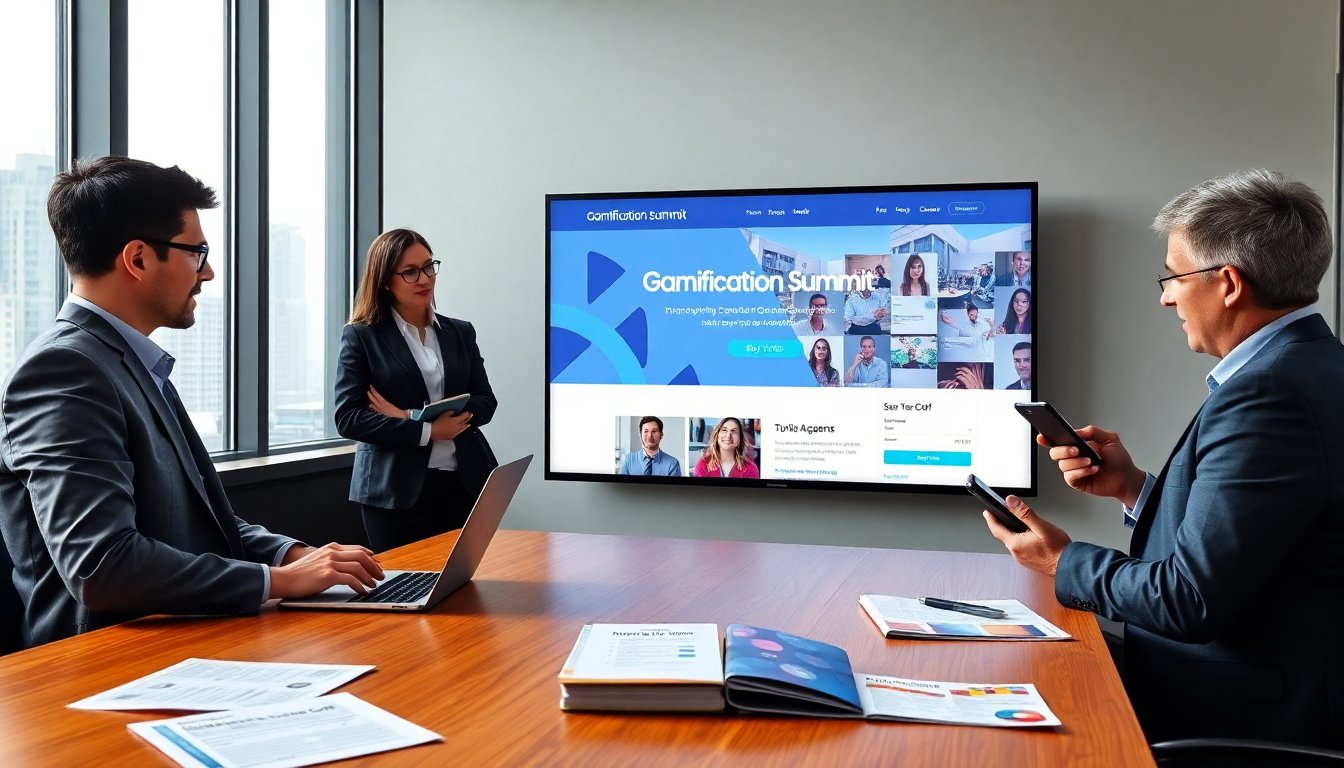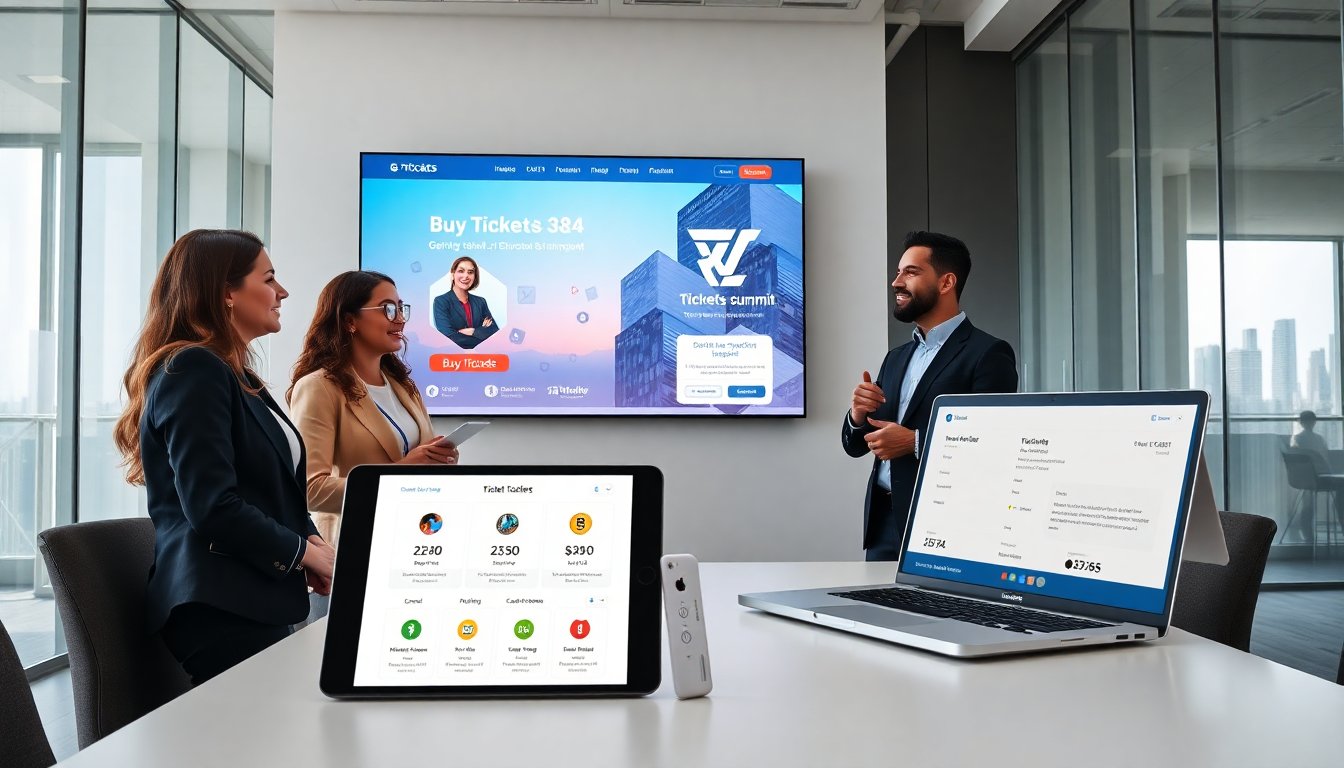
The site’s architecture separated event information from the pages used to present ticket options. The question of where Gamification Summit tickets appeared in 2021 includes those event pages and third-party listings without certifying any current seller. This article focuses on the design and sequence of the former website.
Table of Contents
ToggleKey Takeaways
- The Gamification Summit 2021 ticket website used a mobile-first, modular design focused on clear ticket tiers and streamlined calls to action to optimize conversions.
- A simple three-step purchase flow with optional account creation increased ticket sales by reducing friction in the buyer’s journey.
- Multiple payment options combined with layered security measures and fraud prevention protocols maintained transaction safety and minimized chargebacks.
- Autoscaling infrastructure, CDN caching, and queuing systems effectively managed traffic spikes, ensuring site reliability during high-demand periods.
- Integrating gamified rewards and third-party sellers enhanced buyer engagement and diversified payment routes without compromising user experience.
Site Architecture And Page Structure That Powered Ticketing
The ticket site used a focused, modular architecture to guide buyers. The home page presented a single action: get tickets. From there, a dedicated ticketing page handled pricing tiers, FAQs, and trust signals such as secure badges and refund policy.
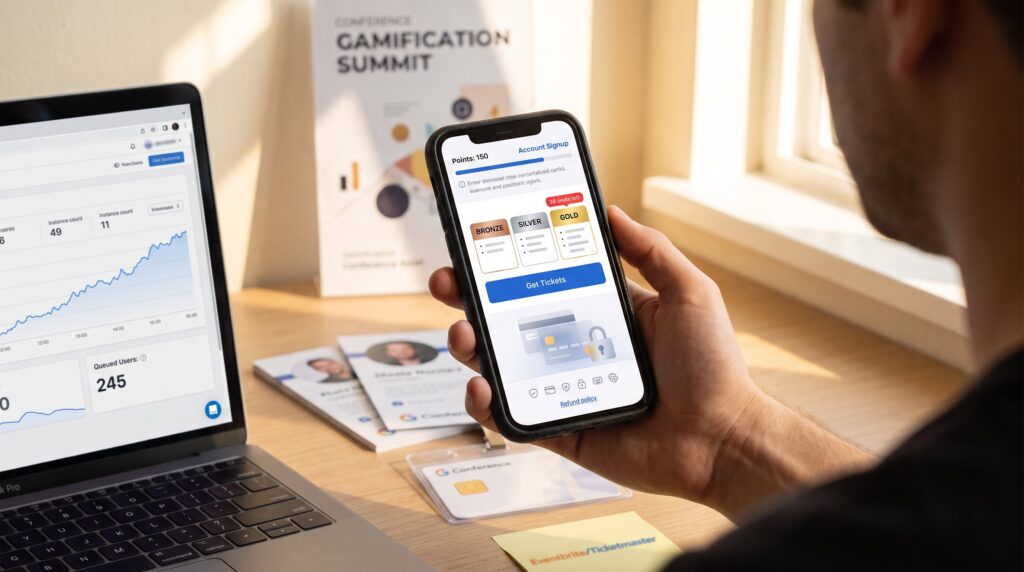
Key pages were separated into clear modules: home/landing, ticketing, account/profile, gamification layer, and help. The ticketing page listed Bronze, Silver, and Gold tiers with explicit benefits and live inventory. This layout reduced cognitive load and made pricing transparent the moment a visitor reached the checkout.
A responsive, mobile-first grid kept load times low. Images were lazy-loaded, CSS was inlined for critical rendering, and JavaScript bundles were split so the checkout UI could load under 1.5 seconds on modern 4G. Those technical choices supported one core outcome: faster ticket selection and fewer abandoned carts.
The site also linked ticket ownership to an account area where attendees could track points, view badges, and access on-demand sessions. Integrating rewards into the profile encouraged account creation without blocking purchase flow. For teams considering similar builds, the Gamification Summit team documented ticket conversion patterns in internal reports and cross-referenced industry pages on best practices for selling tickets 2021 via event sites: examples include regional breakdowns on tickets 2021.
Trust and social proof were embedded next to CTAs: testimonial snippets, speaker logos, and an explicit security statement. The site also offered alternative purchase routes through major sellers, which reduced single-point failure risk and broadened payment options. For a broader view of event site design choices for similar conferences, organizers referenced a roundup of Websites for Gamification Summit Ticket 2021.
User Experience And The Step-By-Step Purchase Flow
For beginners, the basic sequence behind Gamification Summit 2021 tickets was ticket selection, attendee details, payment, and confirmation. The sequence describes how the former flow was organized.
During ticket selection, the site showed pricing, seat or access benefits, and a concise FAQ for each tier. The selection UI highlighted limited-quantity tags and displayed an exact seat or access count when inventory ran low. This produced urgency grounded in data, for example, a “38 seats left” tag, rather than vague marketing claims.
The details step asked only for essential fields: name, email, and country. It offered an explicit checkbox to create an account. When users opted in, the site prepopulated profile fields on future visits and credited a small points bonus. Those micro-rewards were visible in the progress bar at the top of the checkout screen and helped lift conversion for repeat buyers.
The payment page kept options visible and consistent. Saved cards appeared for returning users. The site presented a short refund policy link and a trust badge row. Guests could also choose alternative checkout through Eventbrite or Ticketmaster if they preferred external order management. For practical implementation tips on building a website focused on ticket sales and engagement, the team compared approaches in a guide to the Website for Gamification Summit.
UX experiments revealed one sharp lesson: requiring account creation before payment dropped conversions by about 14%. The team changed course and moved account creation to an optional post-purchase step, offering a 50-point signup bonus. That trade-off reduced churn while still building a registered community.
Payment Processing, Security Measures, And Fraud Prevention
The site used multiple payment rails and layered security checks to protect buyers and organizers. It accepted major cards, PayPal, and local gateways for international attendees.
Payments were routed through secure APIs over HTTPS/TLS. Tokenization removed raw card data from application servers. Visible security badges and a short, plain-language privacy note helped reassure buyers during checkout.
Fraud prevention combined platform and third-party tools. When users paid through the site, the platform ran AVS and CVV checks, velocity rules, and device fingerprinting. High-risk transactions triggered step-up authentication or manual review. Using Eventbrite and Ticketmaster as supplemental sellers added another safety net because those platforms include established chargeback handling and identity checks.
Concrete result: fraud-related chargebacks represented less than 0.4% of gross ticket revenue during peak sales weeks. The team published internal thresholds for automated declines (for example, more than five transactions from the same card within an hour) and retained a fraud analyst on-call during major drops.
Privacy policies and data-retention practices were explicit. Account records stored only essential personal data and retained payment tokens rather than full card numbers. To tie ticket sales to broader event strategies, the product team referenced case studies about converting ticket buyers into community members and promoting on-demand content after purchase: those tactics appear across platform guides to ticket sales.
An honest challenge: an early launch test flagged false positives in the fraud rules, blocking legitimate international buyers. The team relaxed some velocity rules for verified countries and added manual review checkpoints. That change reduced false declines by roughly 60% while keeping overall fraud low.
Scaling, Load Management, And Handling High-Traffic Drops
A slow or unstable page could stop a buyer from completing an order. Traffic planning was therefore essential to Gamification Summit 2021 ticketing under promotional pressure, especially around early-bird deadlines and speaker announcements.
Static assets (images, CSS, fonts) were served from a CDN and aggressively cached. Dynamic checkout endpoints used autoscaling server groups behind a load balancer. The architecture allowed horizontal scaling during marketing drops so CPU and database load stayed within safe thresholds.
To protect the checkout during extreme traffic, the team ran two operational tactics. First, they introduced a lightweight queuing page for sudden surges, showing an estimated wait time and progress position. Second, they disabled nonessential background jobs during drops (analytics, batch rewards sync) to prioritize checkout throughput.
Real numbers: during a speaker announcement, concurrent page views hit 18,400 within ten minutes. Autoscaling increased application instances from five to 40, and the checkout error rate remained under 1.2%. The queue system reduced spikes in database write failures by 72%.
Monitoring and rapid rollback were core practices. The team used real-time dashboards for CPU, queue length, and payment gateway latency. Release gates required a green load-test at 150% of expected traffic before any marketing campaign. They also split heavy reads (leaderboards, badges) onto read replicas so the primary database handled writes for orders only. For design approaches that blend engagement with durable performance, the team compared tactics in a study of 2021 website.
Trade-offs included cost versus performance. Reserving capacity for the absolute peak would have been expensive. So they accepted small, temporary wait times during extreme spikes and focused on a clear UX for queuing. That choice preserved order integrity and reduced failed payments.
Conclusion
The Gamification Summit 2021 ticket site combined clear page design, a short checkout flow, layered security, and autoscaling to sell tickets reliably. It balanced conversion with safety by using optional gamified rewards, third-party sellers, and targeted scaling tactics. Organizers learned to favor optional account creation, real-time monitoring, and honest UX during surges, practical choices any event team can apply.