
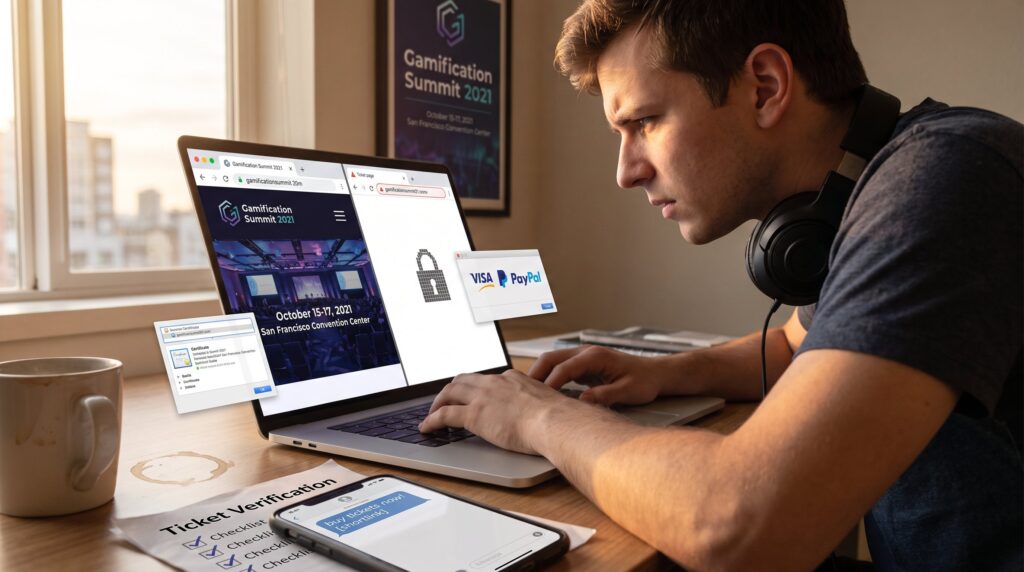
How to Verify a Gamification Summit 2021 Ticket Website starts with simple checks that stop scams before they cost money. Gamers should confirm domain authenticity, secure payment flows, event details, and external proof before entering card data. This guide gives a step-by-step checklist designed for esports fans and hobbyists who want quick, reliable validation steps and practical warnings drawn from real phishing patterns and ticketing errors.
Table of Contents
ToggleKey Takeaways
- Verify the Gamification Summit 2021 ticket website by checking the domain authenticity, including correct spelling, valid SSL certificate, and consistent branding.
- Ensure the ticketing process is transparent with clear ticket costs, merchant identity, and safe payment methods like credit cards or trusted processors to protect buyer rights.
- Confirm event details and organizer credentials by cross-referencing official announcements, venue information, and verified social media confirmations.
- Read all terms and conditions carefully, focusing on refund, transfer, and cancellation policies before completing a purchase.
- Check seller reviews, social media presence, and respond to test inquiries to verify legitimacy and customer service responsiveness.
- Always purchase tickets via verified vendors or official platforms to avoid scams and secure your spot at the Gamification Summit 2021.
Is The Website Domain And Security Legit?
Misspelled domains, extra words and inconsistent branding were common clues on fake Gamification Summit ticket websites. Start by reading the URL and page chrome carefully. Look for small typos, extra words, or unusual top-level domains (for example, gamificationsummit-ticket.com instead of the official name). Gamers often rush and miss swapped letters like “summit” → “summ1t.”
Check SSL details by clicking the padlock. A valid certificate shows the issuer and expiration. If the certificate is self-signed or expired, that is a red flag. Use a domain lookup to confirm registration age: a site created days before ticket sales is riskier than one registered years ago.
Scam patterns to expect: phishing pages that mimic event pages, sudden redirects to payment gateways, and popups that force immediate checkout. A recent example of tournament-themed phishing shows how attackers bait players with fake invites: such tactics indicate transferable risk to ticket sales (Steam phishing scam).
Practical test: open the official Gamification Summit home page and the suspected ticket site in two tabs. Compare logos, contact details, and privacy links. If the ticket site lacks a physical address or lists only a mobile number or web form, treat it cautiously. A legitimate seller usually lists a business address, company registration, and a professional email that matches the domain.
Warning: do not trust short links or ad redirects from social posts. If a link was shared via DM or an influencer’s timed post, verify it back to the event’s official announcement before proceeding.
Verify Ticketing Process And Payment Safety
Answer: A safe purchase clearly displays ticket cost breakdown, merchant identity, and buyer protections before payment. Before entering payment details, the checkout page must show ticket price, service fees, and the merchant or platform name. If the checkout omits fees until after payment, that is a warning sign.
Preferred payment methods are credit cards and trusted processors because they offer dispute rights. Gamers should avoid sellers insisting on wire transfers, cryptocurrency, prepaid gift cards, or “friends and family” payments, these remove buyer protection and are common in recovery-resistant scams.
Practical check: review the payment page for logos of recognized processors (Visa, Mastercard, PayPal) and click the processor logo to confirm it routes to the processor’s secure flow. If the site uses a third-party gateway, confirm the gateway domain with a quick search or by checking the gateway certificate.
Merchant name matters. The checkout should list a legal business name and a phone number that matches the contact info on the site’s footer. If the merchant is a marketplace (Eventbrite, Ticketmaster), verify the listing inside that marketplace rather than on a third-party landing page.
Real example: a gamer reported losing money when a seller texted a payment link and then asked for crypto after the buyer hesitated. The correct action is to cancel and report the number, and contact the official organizer directly.
Link integration: For deeper platform guidance and trusted options, consult the site’s roundup of recommended sellers in the ticket buying guide on Gamification Summit’s newsroom about ticket platforms (Top Sites for Ticket). Also review the site’s long-form guide to purchasing tickets for broader safety tips (Guide to Purchasing Gamification Summit 2026 Tickets).
Confirm Event Details, Organizer Credentials, And Policies
Direct insight: Event details and organizer credentials must match independent sources. Confirm the event name, date, venue, and headliners against the official Gamification Summit announcement and the venue’s site. Discrepancies in dates or speaker lists often indicate a fake listing.
Verify the organizer’s legal name and history. A legitimate organizer lists past events, press mentions, and registration information. Search the organizer’s name plus “company registration” or “past events.” If only a single, recent event appears, proceed carefully and seek clarification from the venue.
Read the terms and conditions and refund policy in full. Look for transfer rules, refund windows, and cancellation procedures. A real event will outline what happens if dates change or a speaker cancels. If refund conditions are vague or absent, that is a risk the buyer is taking.
Practical test: cross-check a speaker’s page or social post that references their participation. If a speaker has publicly confirmed attendance on their verified social profile, that corroborates the ticket listing. Conversely, if a supposed headliner says they’re not attending when messaged, pause and report the listing.
Internal resource: the site’s compiled list of 2021 ticket outlets can help confirm authorized sellers and typical policies: compare the seller against that directory (Tickets 2021 Sites For).
Vulnerable moment: an organizer once posted a soft-sell preannouncement and a copycat created a paid listing before tickets were released. The lesson: wait for an official sale link on the organizer’s verified channels before sending money.
Final Pre-Purchase Checks For Reviews, Social Proof, And Contact Options
Readers assessing old listings should separate historical online-ticket risks around Gamification Summit 2021 from any present-day sales claim.
Archived program updates, speaker confirmations and ticket links help trace the ticket rollout and entry arrangements for Gamification Summit 2021 without implying that the old pages still sold tickets.
Test contact options now. Send a short, specific question such as “Is ticket transfer allowed?” Legitimate organizers reply within a business day with consistent, professional answers. Save the exchange, screenshots help if dispute resolution is necessary.
Internal links: compare the seller against curated site lists and purchase tips in the Gamification Summit resources to confirm legitimacy and recommended channels (Websites for Gamification Summit Ticket 2021) and the site’s roundup of trusted ticket websites (Websites for Gamification).
One more test: search for the exact checkout merchant name plus “chargeback” or “complaint.” If multiple buyers report non-delivery and chargebacks, avoid that seller. Remember: real tickets can be resold through authorized exchanges: if a site blocks transfers entirely without clear reason, that reduces buyer flexibility.
Practical warning: reviews can be faked. Prioritize dated reviews with photos, buyer names, or verifiable social accounts. When in doubt, opt for the official sale channel listed by Gamification Summit or major marketplaces listed in the site’s ticketing guide (Ticket 2021 Websites for).
Conclusion
Buy only through verified vendors and platforms. They must show a correct domain, secure payment flows, matching event details, transparent policies, and real social proof. If any link in that chain looks off, pause and validate. Taking these checks saves money and prevents the frustration of losing a seat at a favorite gaming event.