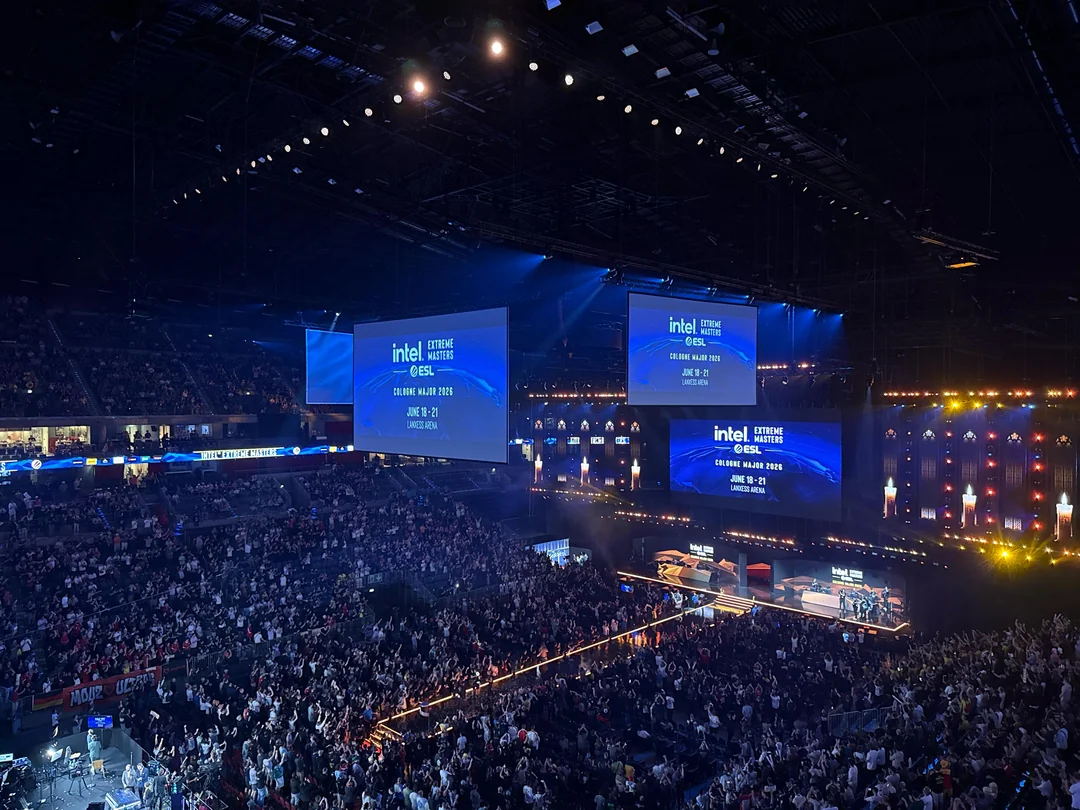
At GDC 2026 in March, Google Cloud put something on stage that stopped a lot of developers mid-conversation. Their demo of AI agents building dynamic game environments in real time. What they called “Living Games”. Wasn’t a concept reel. It was a live system generating quest logic, adjusting NPC dialogue, and reshaping terrain based on individual player behavior, all without a developer touching a line of code between sessions. The audience reaction said a lot: not amazement exactly, more like recognition. This was the thing people had been building toward for years, finally assembled into something coherent.
The shift that demo represented isn’t confined to AAA development pipelines. It’s moving through every tier of game design. Mobile, casual, browser-based, and beyond. Faster than most studios anticipated. Understanding what’s actually changing, and why it matters for anyone who builds or plays games in 2026, requires going a layer deeper than the press releases.
Table of Contents
ToggleAdaptive Reward Systems: The Real Engine Behind the Shift
Reward design has always been the part of game development where psychology and math collide. Skinner boxes, variable ratio reinforcement, cooldown timers. The theoretical groundwork was laid decades ago. What AI changes is the ability to tune those systems at the individual level, in real time, without requiring a designer to manually segment the player base.
The mechanics are cleaner than most people expect. A reinforcement learning model observes player behavior across sessions. Session length, spend velocity, retry rate after failure, the point at which a player stops engaging. It then adjusts the reward cadence to match what keeps that specific player in a state of productive engagement. Not the average player. Not a demographic cluster. That player, that session.
Google DeepMind’s Genie 2 model, which MIT Technology Review identified as a landmark development in early 2025, demonstrated how a single image input could generate an entire interactive world. Terrain, physics, object interaction rules. From scratch. The implication for reward design is significant: if the environment itself can be generated dynamically, then reward triggers don’t need to be scripted in advance. They can be inferred from context.
That shift is most visible today in slot games for real money, where adaptive bonus rounds and RTP-adjusted sessions are now table stakes rather than differentiators. The underlying logic. Serve the right reward at the right moment for the right player. Is identical to what AAA studios are now deploying across open-world titles and live-service mobile games. The real-money gaming vertical just happened to build its infrastructure around behavioral data earlier, which is why the pattern recognition there is further along.
Gambling involves risk. Please play responsibly and only wager what you can afford to lose. If gambling becomes a problem, visit BeGambleAware.org.
What NVIDIA’s ACE Platform Tells Us About NPC Design
Character AI has been the other major front. For most of game history, NPCs operated on decision trees. Predictable. Exploitable. About as convincing as a vending machine.
NVIDIA’s ACE platform, unveiled at CES 2025, changed the framing entirely. NVIDIA’s ACE system enables AI game characters to perceive, plan, and act autonomously. First deployed in PUBG: BATTLEGROUNDS and Naraka: Bladepoint, where companion characters now respond to player strategy rather than executing pre-scripted behavior. An NPC that can actually observe what you’re doing and adjust its behavior accordingly isn’t just more immersive. It fundamentally changes how designers think about challenge scaling.
The downstream effect on reward loops is real. When an NPC adapts to you, the feedback cycle tightens. Players who found the mid-game too predictable stay engaged longer. Players who were struggling get AI companions that quietly compensate without breaking immersion. Neither group necessarily notices the adjustment. Which is precisely the point.
For designers, this creates a new constraint. The reward systems and the character systems now need to be built in conversation with each other. A bonus trigger that fires at a moment of frustration works differently when the NPC in the room has already read that frustration and responded to it. The timing matters more. So does the emotional context.
iGB L!VE 2026 and the AI Supplier Wave
The industry-side signal came in early July, when iGB L!VE 2026 wrapped in London with AI-driven design tools dominating the supplier floor. Not as future roadmap items. As products available for licensing now.
What stood out was the cross-pollination. Studios building casual mobile titles were demoing the same underlying personalization infrastructure that’s been standard in live-service AAA games for the past two years. The gap between a Candy Crush-tier engagement model and a live-service shooter’s reward architecture has closed faster than anyone predicted. Largely because the AI middleware required to run adaptive systems has become cheap enough to deploy at scale.
The publisher analytics layer is the piece that’s changed most sharply. Two years ago, a mid-sized studio running a mobile title had access to aggregate behavioral data with a 24-48 hour lag. Today, real-time inference models can process in-session signals and adjust reward parameters before the player reaches the next screen. That’s not a incremental improvement. It’s a different class of product.
For game designers watching this, the practical takeaway is that the “design it once, ship it, patch later” model is effectively dead for any title competing in a live-service context. You’re building a system that rewrites itself between sessions. The initial design is the seed, not the finished product.
The publisher’s own technical development coverage has tracked this shift closely. The underlying architecture question of how adaptive systems stay stable while remaining genuinely responsive is one designers are actively working through right now.
The Personalization Ceiling. And What Comes After
Here’s where it gets genuinely unsettled. Adaptive reward systems, at their current ceiling, are optimization engines. They’re very good at keeping players engaged. They’re less good at creating the kind of surprise that generates a genuine memory.
The best moments in games. The clutch comeback, the unexpected narrative pivot, the mechanical discovery that reframes how you’ve been playing. Are often the result of friction, not optimization. A system trained to minimize frustration and maximize session length will tend to smooth those moments out. That’s not a bug in the reward model. It’s the reward model working correctly. The problem is that “working correctly” and “creating something worth remembering” aren’t always the same objective.
Some studios are building for this explicitly. The design language around it is still rough. “intentional friction,” “scripted serendipity,” “narrative entropy”. But the underlying idea is that AI systems need a second layer that occasionally contradicts the optimization objective. Feed the player something unexpected precisely because it’s the wrong move by the engagement model’s standards.
Whether that second layer can be built reliably is an open question. The honest answer is that no one has shipped it at scale yet. What 2026 has done is make the first layer. Consistent, personalized, adaptive reward delivery. Genuinely reliable for the first time. The ceiling above that is still being measured.
FAQ
What does Google Cloud’s ‘Living Games’ concept actually mean for developers?
Living Games refers to AI-agent systems that generate and adjust game environments, quest logic, and world behavior in real time without manual developer input between sessions. For studios, it means the game’s state space is no longer fixed at ship. The system continues building from player behavior data. Practically, it changes how QA, balancing, and live-service maintenance are structured.
How is reinforcement learning being used in game reward design?
Reinforcement learning models observe individual player behavior. Retry rate, session length, spend velocity, point of disengagement. And adjust reward timing and intensity to match. Rather than designing for the average player, studios can now tune reward cadence per session. The model learns which triggers maintain engagement for each player type without requiring manual segmentation.
What is NVIDIA ACE and why does it matter for NPC behavior?
NVIDIA ACE is an AI platform that allows game characters to perceive their environment, plan responses, and act autonomously rather than following scripted decision trees. Deployed commercially in PUBG: BATTLEGROUNDS and Naraka: Bladepoint from CES 2025 onward, it means NPC companions and enemies can respond to individual player strategy rather than executing fixed behavior patterns.
Are smaller studios able to access adaptive AI tools or is this just a AAA story?
As of mid-2026, the middleware cost has dropped enough that mobile and mid-tier studios are deploying real-time personalization infrastructure at scale. IGB L!VE 2026 in London showed casual mobile titles running the same underlying adaptive reward architecture as major live-service titles. The gap between tiers has closed faster than most analysts projected two years ago.
What is the main risk of over-optimizing game reward systems with AI?
Optimization engines are very good at maintaining engagement but can inadvertently smooth out the friction that creates memorable moments. Studios are starting to build intentional disruption layers. Design decisions that occasionally contradict the engagement model’s recommendations. To preserve the kind of surprise that pure optimization tends to eliminate. This second layer hasn’t been shipped at scale yet.