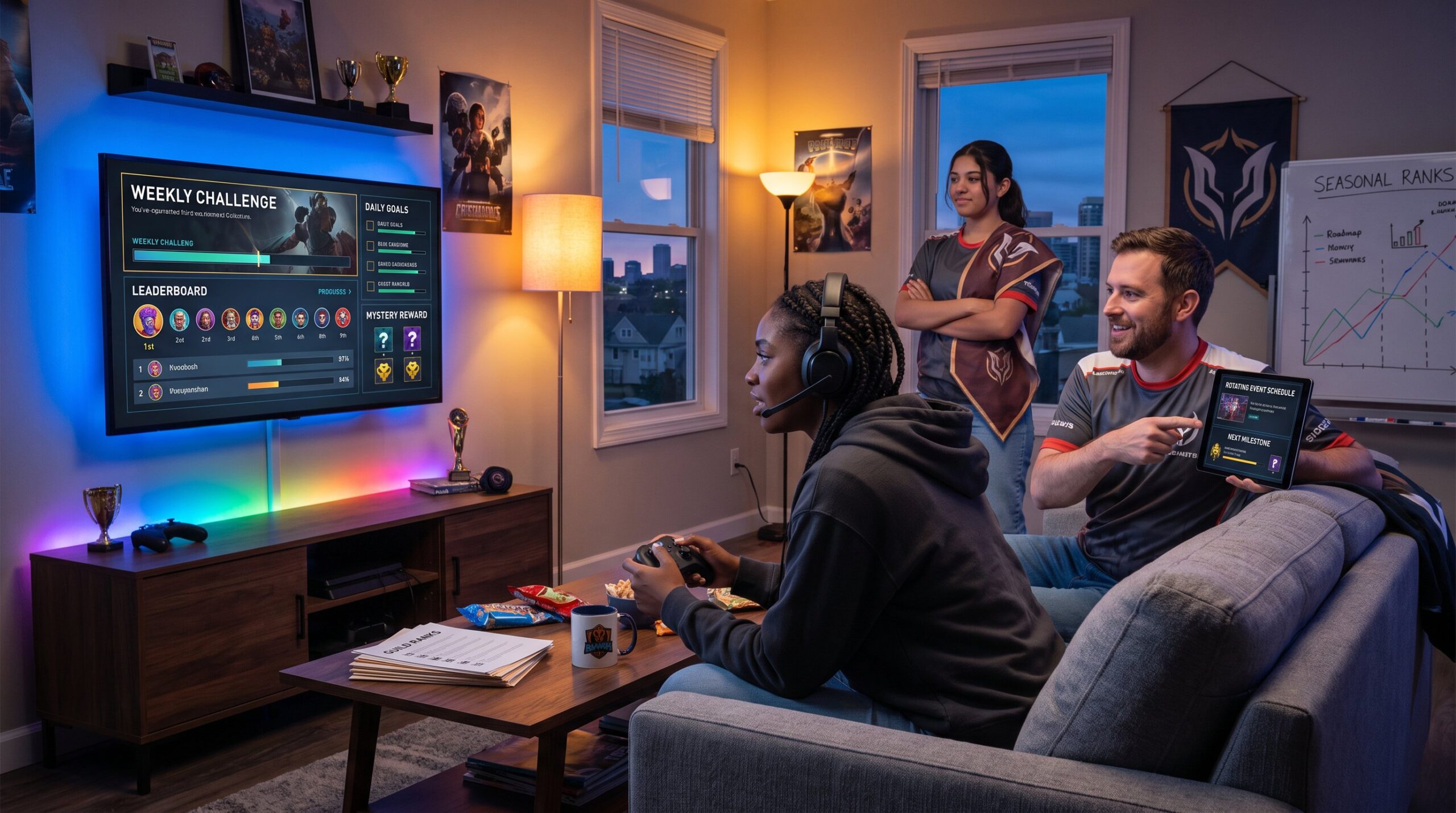

Progress systems shape why players return, how they feel, and whether a game becomes a habit. This guide shows concrete steps designers use to make progress feel meaningful: aligning goals, signaling advancement, and spacing rewards so momentum builds instead of stalls. It targets designers and interested players who want clear, actionable design patterns that increase engagement without resorting to manipulative mechanics.
Table of Contents
ToggleKey Takeaways
- Meaningful progress systems increase player engagement and retention by aligning clear goals, signaling advancement, and pacing rewards effectively.
- Designers should map player motivations like achievement, mastery, collection, status, and exploration to specific progress signals such as XP bars, leaderboards, and completion percentages.
- Establish explicit goals and frequent feedback loops to keep players motivated with micro‑wins spaced every 30–90 seconds during play sessions.
- Layering rewards across short‑term, mid‑term, and long‑term horizons sustains momentum and prevents player frustration or burnout.
- Balance progress rewards between skill and time investment to maintain satisfaction for both casual and skilled players.
- Regularly measure player perception and improve progress visibility to fix opaque upgrade paths and enhance overall game feel.
Why Progress Systems Matter For Engagement, Retention, And Player Satisfaction
Clear fact: healthy progress systems directly increase playtime, reduce churn, and raise player satisfaction. When players see steady improvement, levels rising, abilities unlocked, or narrative beats reached, they keep playing. A stalled bar or opaque upgrade path does the opposite: it creates frustration and abandonment.
Practical evidence: designers find early momentum matters. Games that show a level or reward within the first 10–20 minutes keep a larger share of players into session two. Players also report higher satisfaction when a milestone arrives slightly sooner than expected, a predictable surprise that feels fair.
A concrete example: an action RPG that gives a stat boost every three missions and a new skill on mission five keeps players engaged because the next step is always tangible. This pattern maps to retention metrics: gradual wins reduce the chance a player will churn after week one.
Warning: progress that rewards time but not skill breeds shallow retention. If everything is gated by passive timers, skilled players feel robbed: if only skill matters, casual players burn out. Balance matters for long-term satisfaction.
Define Player Motivations And The Signals That Convey Progress
Clear fact: players pursue a small set of motivations, achievement, mastery, collection, status, and exploration, and each needs distinct progress signals. Designers must map those motivations to concrete indicators.
Actionable mapping: for achievement, use levels and ranked rewards: for mastery, show skill tracking and repeatable challenges: for collection, reveal completion percent and missing items: for status, expose leaderboards and unique cosmetics: for exploration, mark discovered locations and story milestones.
Specific signal types: XP bars, unlock lists, currency totals, gear tiers, and narrative checkpoints. One studio tracked item collection completion and found that showing “3 of 12” on a chest icon increased return sessions by 18% versus hiding counts.
Design tip: pick 2–3 dominant motivations per game and prioritize signals that satisfy them. For a PvP title, emphasize status and mastery with visible ranks and skill stats. For a casual mobile game, emphasize collection and short-term achievement with clear progress counters. Those wanting more background can turn to the gaming guide for the fuller picture.
Related reading: designers often start with basic mechanics before adding nuance: a useful primer on core mechanics appears in an article on Points and progression.
Design Clear Goals And Feedback Loops
Clear fact: players need goals they can state in plain language and feedback that confirms action. The loop is simple: action → feedback → reward → renewed motivation. Make each link visible.
Set explicit goals: “Reach level 10 to unlock the raid,” or “Collect five blueprint pieces to craft the gun.” Players must be able to answer “what am I working toward?” in one sentence.
Feedback design: show progress increments frequently. Micro‑wins every 30–90 seconds of active engagement, small XP, cosmetic drops, or currency, keep the loop tight. Nest these micro‑loops inside mid‑term goals like chapters or upgrade milestones, and inside long arcs such as prestige systems.
Vulnerable moment: a team once hid upgrade requirements in menus. Players stopped pursuing upgrades because they couldn’t tell what actions moved the bar. The team fixed this by adding a persistent progress widget: engagement rose immediately.
Related links: for how progress ties to human psychology, The Psychology Behind Gamification.
Layer Rewards And Pacing: Short‑Term, Mid‑Term, And Long‑Term Progress
Clear fact: layered pacing keeps players engaged across sessions. Designers should create three nested horizons: short wins, session goals, and long arcs.
Short‑term (seconds–minutes): frequent micro‑rewards like small XP or minor loot. These prevent the feeling of empty play and should occur roughly every 30–90 seconds during focused play.
Mid‑term (1–3 sessions): goals like chapter completion, equipment upgrades, or unlockable modes. These give players a sense that sessions build toward something meaningful.
Long‑term (weeks–months): prestige systems, collections that require many sessions, or story arcs that transform play. These keep habitual players invested.
Concrete schedule: design one micro‑reward per minute on average, a mid‑term milestone every 2–4 sessions, and a long‑term arc that takes 20+ hours. This spacing balances momentum and aspiration without creating grind.
Related context: players new to progression systems often benefit from a primer: a helpful overview is available in What Is Gamification and How Does It Work?.
Conclusion
Actionable insight: meaningful progress comes from clear goals, timely feedback, and layered rewards that match motivation. Designers should measure player perception, fix opaque pathways, and tune pacing so wins arrive before frustration sets in. For teams building progression systems, grounding design choices in player motivations and proven patterns prevents common mistakes and creates games players love.